Hotel Management

Hotel Personalisation: The Complete Strategy Guide

26 June 2026

Personalisation in Hotels: Overview

  • Willingness to spend increases: 61% of guests spend more when hotels offer personalised experiences.
  • Even basic personalisation delivers results: Simply moving from no personalisation to basic personalisation boosts conversion by 5% and average order value by nearly 8%.
  • Hyper-personalisation remains the exception: Only a small number of travel brands have adopted AI-driven one-to-one personalisation. Segment-based approaches still dominate the industry today.

What Is Hotel Personalisation?

Hotel personalisation is the practice of tailoring every aspect of a guest’s stay, from pre-arrival communication to in-room amenities, to their individual preferences, behaviours, and needs.

The business case is compelling: McKinsey reports that 61% of consumers are willing to spend more with brands that offer personalised experiences, provided their personal data is handled with care and transparency. [1] [2]

Key Components of an Effective Hotel Personalisation Strategy

Data Collection & Management

Data analytics automates the collection and analysis of large sets of guests‘ data. This identifies guests‘ typical behaviour patterns, as well as trends and insights, which can then be subtly presented back to the guest as part of the hotel’s personalisation strategies. Information arrives from disparate sources, such as online behaviour, booking records, reviews, ancillary purchases, and service requests during stays.

Personalised Marketing

Personalisation is a valuable and profitable strategy which raises hotel guests’ perceived involvement in the brand through simple messaging. By presenting services that appear to be individually conceived, guests feel they are receiving more personal and special treatment. The hotel becomes a home-from-home and, consequently, somewhere the guest wants to return to. Effective personalisation in the hotel industry involves integrating tailored interactions both online and face-to-face in the hotel, enhancing guest services with better emotional connections, thereby driving loyalty and revenue for future bookings. [3]

Proactive Staff Training

Exceptional guest experiences begin long before check-in. Front-of-house staff who are trained to anticipate needs rather than simply respond to them are the cornerstone of effective hotel personalisation. Using information they have gleaned from the guest’s data profile and applying emotional intelligence techniques from their training, staff are much better equipped to create a memorable, effective but natural interaction. The results speak for themselves: higher spend per visit, stronger loyalty, and repeat bookings. The guest is impressed with the attentive service and the staff member feels a sense of reward for being able to offer such personal service. [4]

Using AI and Machine Learning

The option of combining AI and machine learning with training has been gathering pace for some time. There is now a proliferation of AI in hospitality courses, where traditional training with human role play has been superseded by virtual reality and AI simulations. Study can be tailored to an individual‘s rate of learning and course progress can be automatically forwarded to management.

Using Hotel Guest Personalisation Technology

The power of the collection, analysis and implementation of data in any hotel has undergone a sea change in recent years. However, stumbling blocks still remain, particularly with integrating different systems to create a holistic hotel guest personalisation strategy.

At present, many hotels still rely on simple customer relationship management software, which enables guest information to be captured and stored. However, when it comes to more complex data sets, such as a menu and bar choices or the hotel’s operational procedures, then AI or machine learning applications have the required leverage. The optimum solution is to connect systems to one platform to analyse real-time data across multiple sites.

How Does Personalisation Improve the Hotel Guest Experience?

Enhanced Guest Satisfaction

For the hotel, guest personalisation creates an emotional and trusting connection with a staff member, which extends to the hotel brand. Historically, interactions between hotel staff and guests were purely transactional. Personalisation only extended to possibly remembering a guest’s name. However, now, through the processes of today’s personalisation guests are made to feel recognised and valued as individuals rather than as just another guest. Everyone likes to feel special and personalisation transforms these everyday interactions from a simple transaction to an emotional connection, which is more personal and lasting. [5]

Increased Loyalty & Retention

Having already had one positive experience, returning guests will be more ready to trust the brand once again. It’s been shown that loyalty members routinely spend an extra 22.4% while extending their stay by 28%, compared to new guests. Guests that are familiar with their spending on previous stays are less likely to be drawn into comparing room prices online too. [6]

Lower Guest Acquisition

New guests booking through an online travel agent or website will often incur commission fees or advertising expenses, thereby pushing up the price. Loyalty members with a positive experience still fresh in their minds will be much more likely to book directly with the hotel to make good use of their loyalty perks. The hotel retains the better revenue and the guest is pleased they are getting a good deal.

Better Revenue Forecasting

Data can be used to formulate segment-driven pricing. These guest segments, such as transient, corporate negotiated, and groups, can be allocated tailored rates with higher price points, which are still acceptable to guests.

The Personalisation Maturity Curve: From Basic to Hyper-Personal

Stage 1: No Personalisation (One-to-All)

Before the implementation of the hotel personalised strategy, the playing field for service was the same for all hotels. With no attempt to personalise individually, guests would receive similar marketing emails and the same discounts. Website content would be generic with no attempt to satisfy guests’ individual needs. Without the synergy of individualisation, the relationship between staff and guests was weaker. [7]

Stage 2: Basic Personalisation (One-to-Many)

In rudimentary personalisation, emails become individualised with first names and addresses and they could include relevant offers and information specific to the guest’s age. Guests can be welcomed back as returning visitors and offers can be made on the basis of purchases during prior stays. Just the improvement from no personalisation to basic personalisation can result in a 5% increase in conversion, while the average order value can increase by nearly 8%. [8]

Stage 3: Segment-Based Personalisation (One-to-Some)

Segment-based personalisation is based on sorting the spectrum of guests into smaller groups or segments, where each segment contains defined characteristics.

The segmentation is broken down into four types:

  1. Demographic: guests are defined by age, gender, occupation, income, marital status and family size
  2. Psychographic: guest personalisation is based on beliefs, hobbies, values, opinions and lifestyle
  3. Geographic: guests are segmented based on where they live and work
  4. Behavioral: guests are defined according to their interaction with the hotel. It encompasses online browsing and purchasing patterns, time spent on each webpage etc.

Segment-based personalisation is by far the most popular level of personalisation used in industry today. It is tried and tested and strikes a good balance between attentiveness to each guest without too much complexity systems. [9]

Stage 4: Microsegmentation (One-to-Few)

Microsegmentation applies the success of segment-based personalisation but extends the theme with further subdivision. Each micro-segment will contain a small group of guests that share the features of two or more traditional segment-based groups. Furthering this subdivision enables hotels to offer much more tailored offers and amenities depending on their personal classification and experience with the hotel.

Stage 5: Hyper-Personalisation (One-to-One)

It was around 2019 when hyper-personalisation started to appear as the new buzzword in hotel publications. AI was finding traction and the possibilities for it in customer service in the hotel industry rapidly became clear. The difficulty of offering personal service in busy environments with many guests suddenly found a solution.

Various components make up hyper-personalisation. It is aimed at the individual guest about whom the hotel has built up a full profile and trip information. By applying machine learning and predictive analytic tools, pertinent offers and information can be supplied to one individual.

However, efficiency at such refined levels starts to fall prey to diminishing returns. Consequently, moving from segment-based personalisation and microsegmentation to hyper-personalisation is a quantum shift that only a smaller selection of travel brands have decided to adopt. [10]

Personalising the Entire Guest Journey: Pre-Arrival to Post-Stay

Personalising the hotel customer journey starts well before arrival.

Pre-Arrival: Set the Tone Before Check-In

Early contact with the guest must be personalised whereby information can be gathered to set the framework for their stay. At the pre-arrival stage, contact can include:

  • Forms are sent to enable guests to select their ideal preferences, such as room type, room temperature, personal care products, and room preference, such as quiet or ground floor.
  • At each point of contact, personalised messages help to reinforce the relationship between staff and guests. Personalised emails or texts can provide useful local information on weather, the arts, and restaurants commensurate with the price point of the hotel.
  • Targeted upgrades can include spa sessions, dining experiences and excursions. [11]

Arrival and Check-In: First Impressions Count

  • Guests who prefer to check-in digitally can use the mobile app thereby avoiding queues and delays.
  • Returning guests are greeted personally, either via the front desk or the app, and are reminded of their preferences from their previous stay.
  • Personalised hotel amenities can also be offered. [12]

In-Stay: Creating Moments That Matter

  • More routine housekeeping questions can be simply handled by AI, for example what time is breakfast or when is checkout. However, if a chatbot struggles with a query, it should be quickly transferred to a staff member to minimise frustration for the guest.
  • Further recommendations for in-house dining offers, personalised experiences, as well as external entertainment and dining options close by.
  • The in-room customisation will have been set to the guest‘s previous preferences but the option is there for these to be adjusted in the room if required. [13]

Post-Stay: Turn Guests Into Loyal Advocates

  • Once the guest has left the hotel, post-stay information gathering is vital to verify the guest’s experience to further engender loyalty and improve the likelihood of rebooking.
  • A personalised thank you can be designed to open up the opportunity for a guest to comment on their experience, whether that be good or could be enhanced. A parting thank you also further strengthens loyalty and can be combined with a loyalty program, where guests can take advantage of discounts and offers on future stays. [14]

Technology That Powers Hotel Personalisation

CRM Platforms

A Customer Relationship Management system (CRM) is used to manage and record interactions with existing customers and new guests. Wide ranging customer data, such as contact details, purchase history, food and beverage choices and amenity preferences, can all be easily noted and retrieved.

Applicable to both small and large operators, an appropriate CRM platform enables hospitality brands to access valuable insights into customer preferences and behaviours. This information can then be converted into personalised offerings for guests, thereby improving revenue and guest retention. [15] [16]

AI, Machine Learning and Predictive Analytics

Machine Learning (ML) is a subset of AI which enables systems to learn guests‘ choices from data and personalise offers that are made to them. Predictive Analytics is more of a business tool in which statistics are used to forecast future outcomes. Often, ML is used as the driving force for such analysis.

Smart-Room Tech and IoT

Smart-Room Tech uses IoT-enabled devices to enable in-room customisation in hotels. The applications are manifold, including:

  • Voice-Activated Assistants: Such as Alexa or Google Assistant which control lights, temperature, and can make reception requests.
  • Environmental Control: IoT systems are automatically set to adjust lighting, curtains, and room temperature to a guest’s preferred settings upon arrival. By downloading the hotel’s app, guests are enabled to remotely adjust their own settings during their stay. [17]

Mobile-First Guest Engagement

With the proliferation of mobile phones, Mobile-First Guest Engagement is a strategic approach where guests are offered the best level of service and personalisation on their own handset. Apps are specifically designed for the small screen and offer straightforward interaction ensuring the guest journey is as trouble-free as possible. These apps can be used for a number of functions including:

  • Booking and checking in
  • Unlocking room doors
  • Creating personalised offers using GPS data
  • In-room food and drink service
  • Instant messaging and chatbots for queries

How ADA Atelier Brings Personalisation to Life

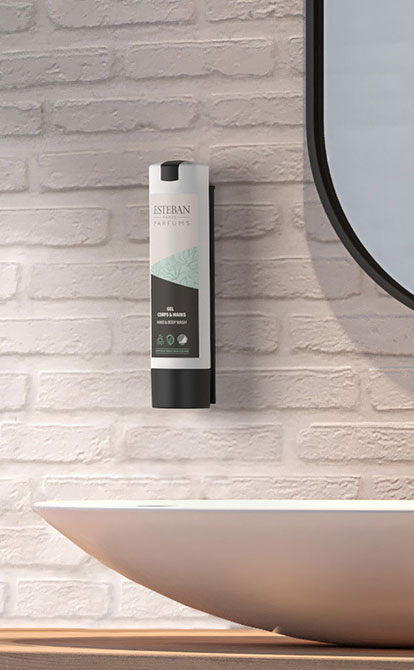
Scent is the most powerful memory trigger we possess. A carefully crafted branded fragrance doesn’t just smell beautiful, it becomes your hotel’s olfactory signature, imprinted in the minds of guests long after they’ve checked out. And the bathroom? It’s the one touchpoint every single guest uses, multiple times a day. Make it count!

With ADA Atelier, hotels can create a bespoke cosmetics line that is unmistakably, exclusively theirs:

  • Level 1 is the effortless entry point: your logo, your colours, your chosen fragrance, paired with one of ADA Cosmetics’ three hygienic dispenser systems.
  • Level 2 extends that identity to the packaging itself, adding premium, fully recyclable materials for a signature look inside and out.
  • Level 3 is where your brand truly comes alive: a complete bespoke amenity line with custom formulation and a signature fragrance, woven through every product your guests touch.

Whichever level fits your vision, ADA Atelier is ready to bring it to life.

FAQ

How do hotels balance personalisation with guest privacy?

Regulations such as GDPR in Europe raised awareness of privacy issues rapidly, so they are now embedded in business culture. Guests accept that their data will be used for personalisation but they expect full transparency and professional handling in return. Any approach that feels intrusive will quickly erode trust. Keeping guests informed is key to striking the right balance. [18] However, personalisation doesn’t necessarily require collecting more and more data. By applying principles like data minimisation and ensuring hotel systems communicate coherently, hotels can deliver meaningful, tailored experiences without compromising guest privacy. [19]

What are the best examples of hotel personalisation?

Hotel personalisation spans a wide spectrum. The most effective examples include:

  • AI Concierge Services: AI-powered virtual concierges provide guests with tailored recommendations for local restaurants, attractions, and activities based on their preferences, travel purpose, and past behaviour. Available 24/7, they respond faster and more consistently than traditional front-desk interactions.
  • Personalised In-Room Entertainment: Hotels allow guests to link their own streaming accounts, such as Netflix or Spotify, directly to in-room screens, creating a familiar, home-from-home experience from the moment they arrive.
  • Smart Room Technology: Guests can control lighting, temperature, and electric blinds via dedicated smartphone apps with settings saved and automatically applied on return visits. Some properties pre-adjust rooms based on guest profiles before check-in.

Can small or independent hotels implement personalisation?

Small and independent hotels typically have higher staffing levels than larger chains. This immediately puts them at an advantage in formulating personalisation. Higher staffing levels mean there is more time to adapt guest services individually. Large hotel chains by necessity need to rely on standardised procedures purely to accommodate the higher staff-to-guest ratio. However, personalisation for smaller hotels doesn’t need a large budget; it thrives on attentiveness and utilizing data to create memorable, individual experiences. [20] [21]

CONTACT
SHOP NOW

Buy ADA Cosmetics products in our online shop.

REQUEST AN OFFER

For product inquiries worldwide, please contact our sales partners.

CONTACT

For contact inquiries of all kinds, please use our contact form. We will get in touch with you as soon as possible.