The best hotel amenities are specific to the customer segment and context and serve as props in an overall narrative. Consider, broadly speaking, each segment’s primary motivator when booking. In this section, we’ll take a more detailed look at a few major hotel types.
Luxury Hotel Amenities
Luxury hotels as a class are defined by the amenities they offer. For hotels in this class, “amenities” are not merely “nice to have” options; they are integral to the experience.
Luxury Hotel Cosmetics
In luxury properties, cosmetics are no mere décor; they form the very core of the brand’s promise. Guests expect boutique quality, coordinated fragrances, and packaging that telegraphs refinement from the moment they enter the bathroom.
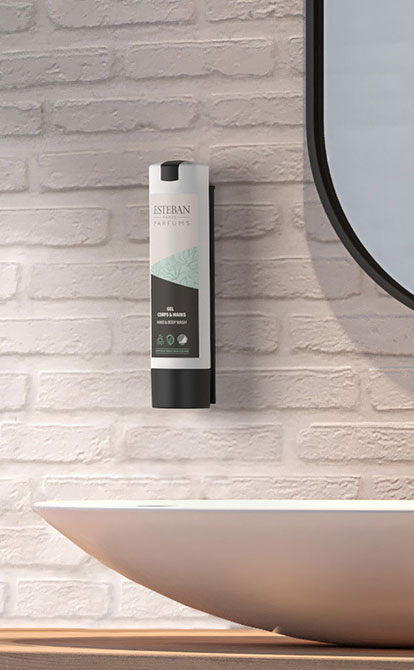
Presentation is especially evolving under sustainability rules. States including California (in force) and New York (rolling out) restrict single-use toiletry bottles, pushing luxury hotels toward elegant, refillable systems. ADA Cosmetics’ modern dispenser solutions like ILLI preserve the premium look while helping hotels stay in compliance with the new rules.
Moreover, our products span designer and spa names for all tiers of hospitality, making it practical to match product pedigree to a rate strategy – without losing coherence. Our On Invitation portfolio, including the Amouage, Asprey, and Chopard, represents the crème de la crème: our curated collection of exquisite brands.
Signature Hotel Amenities
In the quest to stand out, many hotels – especially in the luxury and boutique segment – develop signature amenities that are unique to their brand or property. A signature hotel amenity is something proprietary or specially curated that guests cannot find anywhere else. It serves as a marker of the hotel’s identity and often becomes a point of pride in marketing. Here are some common forms of signature amenities and examples:
- Custom-Branded Toiletries (Signature Scent)
Perhaps the most widespread signature amenity is a hotel’s own line of bathroom products. Instead of using an off-the-shelf luxury brand, some high-end hotels create a signature fragrance and toiletry collection just for themselves.
| ADA Atelier offers hoteliers the opportunity to create bespoke amenity lines. Using Actimood® technology, ADA Cosmetics’ helps hoteliers develop a unique scent that is then infused into the hotel’s own line of bathroom amenities. These shampoo, conditioner, soap, and lotion products all bear the hotel’s name and carry the hotel’s unique, identifying scent.
Inspired by local elements (such as coastal sage, desert bloom, tropical orchid, etc., depending on location), the scent transports guests back to the memory of the stay.
The benefit of signature amenities is that they differentiate the hotel in a memorable way. They create an emotional connection – a classic example of scent marketing, where a guest might forever associate the fragrance of a custom candle in the lobby with their honeymoon memories. |
- Signature Welcome Amenities
Many hotels have a unique way of welcoming guests that becomes a signature. For example, DoubleTree by Hilton famously presents guests with a warm chocolate chip cookie at check-in. Welcome touches are small amenities that cost little but carry symbolic weight and often reflect on local culture or the brand’s vibe.
A luxury resort in Fiji might have a welcome song by staff and a coconut drink; an urban luxury hotel might send a small dessert to your room with your name written in chocolate on the plate. The key is that it be unique to that hotel or brand, building a sense of occasion around arrival.
- Customized Merchandise and Keepsakes
Hotels may also provide a little take-home item as a signature amenity. An upscale resort might leave a small local handcrafted gift in the room – perhaps a ceramic ornament, a vial of local spices, or a seashell necklace – that guests can keep.
Some boutique hotels partner with local artisans to supply these local gifts as part of their boutique hotel amenities strategy, tying into supporting the community and giving guests something authentic (e.g. a small jar of locally made jam, or a piece of handmade soap from a local soapmaker). These curated keepsakes can become a signature touch that guests anticipate.
For hoteliers, it’s worth brainstorming what small detail or service could be their signature – something that complements their brand and leaves a lasting impression on guests.
| Beyond toiletries and welcome touches, some luxury properties also elevate the guest experience through exclusive beverage concepts. One standout example is BWT Diamond Water – “the most valuable water on our planet” – which combines exclusive taste, natural minerals like magnesium and silicate, and sustainability benefits by avoiding bottled water transport. Served in select fine-dining restaurants and hotels worldwide, Diamond Water demonstrates how hydration itself can become a signature amenity that signals luxury, wellness, and environmental responsibility. |
Health and Wellness Amenities
In a 2019 Boston University study of amenity utilization by guests, researchers found that health and wellness is one area where guests often intend to do more than they actually do. While 46% of guests stated an intention to use the hotel’s fitness center, for example, only 18% actually did so at least once during their stay.
An observant hotelier could reasonably conclude that guests do not care about using fitness equipment, but according to the study, this is incorrect. On the contrary, in a market where nearly half of travelers see fitness centers as a perk they intend to use, a fitness center is a valuable booking attraction – whether or not it is ever actually utilized.
The amenities and facilities on this list are not just status symbols, and they are not necessarily pointless, even if they are at times underutilized. Research shows that, when it comes to amenities, hoteliers are catering as much to guests’ intentions as to the reality of their stay.
- Cosmetic products: Our Beauty & Wellness portfolio transforms everyday care into a spa-inspired ritual. Each carefully curated brand is designed to engage the senses, offering moments of relaxation, rejuvenation, and restoration. Guests can enjoy well-deserved me-time as they nurture both body and soul with products that go far beyond basic amenities.
- Fitness centers: Clean, 24/7 facilities with diverse cardio, strength, and stretch zones are a baseline expectation.
- Pools and hot tubs: Programming – poolside yoga, water aerobics, guided stretches, etc. – and accessibility aids (handrails, lifts) help guests at all fitness levels take good intentions to rewarding real achievements.
- Spa services: Saunas, steam rooms, experience showers, and curated menus (massages, facials, bodywork) anchor relaxation. A robust, $88 billion dollar spa market signals sustained guest demand.
- Wellness programs and classes: Sunrise yoga, nature walks, meditation gardens, prayer rooms, and group fitness are often coordinated by a wellness concierge who can help differentiate experience-led properties and foster repeat business via structured, goal-oriented stays and retreats.
- Healthy Food and Beverages: Elevate menus with spa cuisine, fresh-pressed juices, and clear allergen labeling. Feature grass-fed beef, non-GMO, and low-sugar options. Complement with infused-water stations and herbal teas to embed nutrition into the stay.
- Sleep & comfort: Pillow menus and sleep kits validate recovery as a wellness pillar, improving perceived rest quality, next-day productivity, and guest satisfaction.
In conclusion, health and wellness amenities have moved from being a niche offering to an almost mainstream expectation, especially in higher-tier hotels. For a small or mid-size hotel chain in the U.S. market, highlighting and expanding wellness amenities can be a competitive advantage in 2026.
Boutique Hotel Amenities
Boutique hotels pride themselves on offering unique, non-generic experiences, often with a local flair or thematic twist. As such, boutique hotel amenities tend to be creative, personalized, and reflective of the hotel’s character and its surroundings. They might not have the scale of amenities that a large chain can offer (like a huge spa or multiple restaurants), but they make up for it with charm and thoughtful touches.
Here are some hallmark amenities and ideas often found in boutique properties, especially in the U.S.:
- Local Welcome Treat
A boutique hotel often greets guests with something distinctly local. For example, a boutique hotel in Napa Valley might offer a welcome drink from a local winery. A mountain lodge might welcome guests with house-made hot chocolate or a local craft beer.
- Custom Themed Toiletries
Many boutique hotels are design-driven and have a theme or story (be it literary, artistic, historical, etc.). They extend this to amenities by customizing things like toiletries to match the theme. For instance, a boutique hotel set in a serene countryside might theme itself around aromatherapy and lavender. ADA Cosmetics in partnership with spa skincare maker Yon-Ka, could help the hotel provide guests with lavender-scented bath products in rooms.
- Personalized Keepsakes
Some places might leave a small edible amenity in the room: a few artisan chocolates from a local chocolatier, a jar of regionally sourced honey, or fresh fruit from a local farm. Guests perceive these as generous and authentic – a taste of the locale that they wouldn’t get at a standard chain.
- Library or Game Lounge
A favorite from Copenhagen, Denmark, a game lounge is a cozy space replete with books, board games, and perhaps a complimentary snack bar, encouraging guests to interact, relax, and play a board game or read a book, as if at home.
- Local Guide and Perks
Some boutiques hand guests a curated local guidebook or app and may include freebies. To wit, “Show this room key at the ice cream shop next door for a free scoop” – essentially extending boutique hospitality into the community.
By excelling in these kinds of amenities, boutique hotels create loyal fans who often rave about the “special touches” that made their stay memorable.
Eco-Friendly Hotel Amenities
Sustainability has moved from niche to norm. Guests – especially younger travellers – expect genuine waste reduction that is not mere self-dealing.
- Eco-conscious cosmetic products
Eco-friendly cosmetic products like our Game Changer portfolio are now baseline expectations and, in some jurisdictions, legal requirements. The winning formula: premium refillable dispensing, plastic-light accessory kits and transparent storytelling that cannot be misunderstood as self-dealing or greenwashing spare the environment, provide long-run cost savings, and bring higher guest satisfaction.
- Bulk dispensers for toiletries
With bans on single-use toiletry bottles now active in California (50+ rooms from 2023) and New York (from 2024), upscale-appropriate, refillable systems have become standard. Modern solutions (e.g., ADA Cosmetics press+wash dispenser) combine secure, hygienic dosing with premium presentation, reducing plastic at scale while maintaining the luxury cue guests expect.
- Sustainable accessory kits
Beyond liquids, “dry” amenities are shifting to natural materials and minimal packaging. ADA Cosmetics’ sustainable accessories replace plastics with bamboo handles (toothbrushes/razors), cotton cloths (for shoe care), and wooden buttons in sewing kits, explicitly targeting plastic removal wherever possible. The aesthetic suits boutique and wellness-led properties and signals serious intent, not greenwash.
- Refillable water & in-house bottling
Hotels are retiring single-use plastic water bottles in favor of filtered refill stations and reusable glass/aluminum bottles or bottling on site in glass – highly visible moves that earn guest approval and lower recurring costs.
- Green in-room & responsible consumables
Recycling bins, energy-efficient kettles, fair-trade/organic coffee and tea, wooden stirrers, compostable pods, and plant-based slippers extend the reduce-reuse-recycle ethos into daily touchpoints without sacrificing comfort.
- Communication & certification
Clear explanations and recognized labels (e.g., GreenKey) build trust.
- Supplier impact & partnerships
Chain adoption accelerated post-2020. ADA Cosmetics participates in initiatives such as Pack4Good and partners with Plastic Bank to help offset plastic through collection and recycling – useful proof points in owner requests for proposal and guest communications.