The hospitality customer journey unfolds in 8 key stages, beginning with the dreaming phase.
1. Dreaming
The decision to travel starts for 59% of guests as a dream without a specific destination in mind. Because guests in this stage have not yet picked a destination, they are highly receptive to advertising.
One study found that in the seven weeks leading up to a booking, the average guest racks up some 140 page views of travel websites. What is the customer searching for? Inspiration. While just 14% of American travelers cite family and friends as the decisive influence when choosing a destination, some 19% cite advertising, particularly in this initial, dreaming phase of the trip. These travelers have already committed to buying a journey – any journey – nearly two months before they decide upon a particular destination.
The savvy hotelier can create a kind of travelogue of her own to feed the imagination of the nearly one fifth of all potential guests who are actively trawling the web for inspiration. Social media should be part of any hotelier’s advertising strategy, as should an imaginative and visually appealing website.
Hotel website visits accounted for some 17% of web traffic by travelers in this stage, and 54% of vacationers cite video and photos as having influenced their eventual choice of destination.
“From the sailing log-like periplous of the Hellenized Romans to the 1775 classic of Modern English literature, Samuel Johnson’s A Journey to the Western Islands of Scotland, there has long been a market for just this, dream stage of travel.”
2. Planning
The planning stage in the hospitality customer journey commences once the guest has chosen a destination and begun searching for accommodations. This constitutes the first stage of the purchasing process or, to use Think with Google terminology, “The Messy Middle” – the time between the “trigger” and the “purchase”.
It isn’t a linear process. In the planning stage, customers engage in an expansive activity Google terms “exploration,” which can best be visualized as a large, swooping circle. The guest’s goals are to find the hotel that offers the best experience for the greatest value, and to do so, the typical traveler will visit 20 sites across nine unique search sessions.
This process is not as objective as it may sound. There are 6 major biases that Google identified which a challenger brand can use to sway a customer’s decision away from an established brand or a brand with a lower price point:
- Category Heuristics – A short description of key products and services makes it easier for a potential customer to say yes.
- Power of Now – The lengthier the time to find out availability or to book a room with a hotel, the less likely a customer will follow through.
- Scarcity Bias – The less of a product or service there is remaining, the likelier a customer is to buy it.
- Authority Bias – People still listen to expert recommendations and reviews, and they will often prefer an accommodation they can find from a trusted source, e.g., an online travel agency.
- Power of Free – A free gift with a reservation is a powerful motivator, regardless of its actual cost to the hotelier.
How powerful are these biases? Google found that when shoppers were offered a fictitious cereal brand that boasted five-star reviews and offered 20% more than a well-known competitor, 28% of shoppers switched to the fictitious brand. The challenger brand was able to gain more than a quarter of the market share just by appealing to these biases.
3. Booking
In the booking stage, the customer makes a final decision on accommodations and completes her purchase. This is the second half of The Messy Middle, in which the customer flips from the expansive “exploration” mode into a reductive “evaluation” mode. If the first could be thought of as a large, swooping circle, the evaluation mode can be imagined as an ever-tightening circle that eventually leads to the purchase decision.
Guests are looking for reasons to cut down on their choices. Cumbersome booking processes, delayed availability, inferior value for the money, and less than promising website images are all reasons to cut a hotel from the customer’s increasingly shortlist.
To sweeten the pot, hotels can consider add-ons such as airport transport, packages that include on- and off-site amenities, or upgraded room offers that add value. These do not need to be freebies; they can and, in some cases, should command a price increase. The point here is for the hotel to establish itself as a value leader in the mind of the potential customer as she is making her choice.
4. Pre-arrival
After booking but before arriving, the guest is in the pre-arrival stage. Hotels can take advantage of the typical customer’s excitement and anticipation by keeping up regular communication. This is also a good opportunity to present value-added offers that could increase per-guest revenue, for example, an upgraded room that has recently become available, tickets for local events, additional services and amenities available for a fee, etc.
5. Check-in
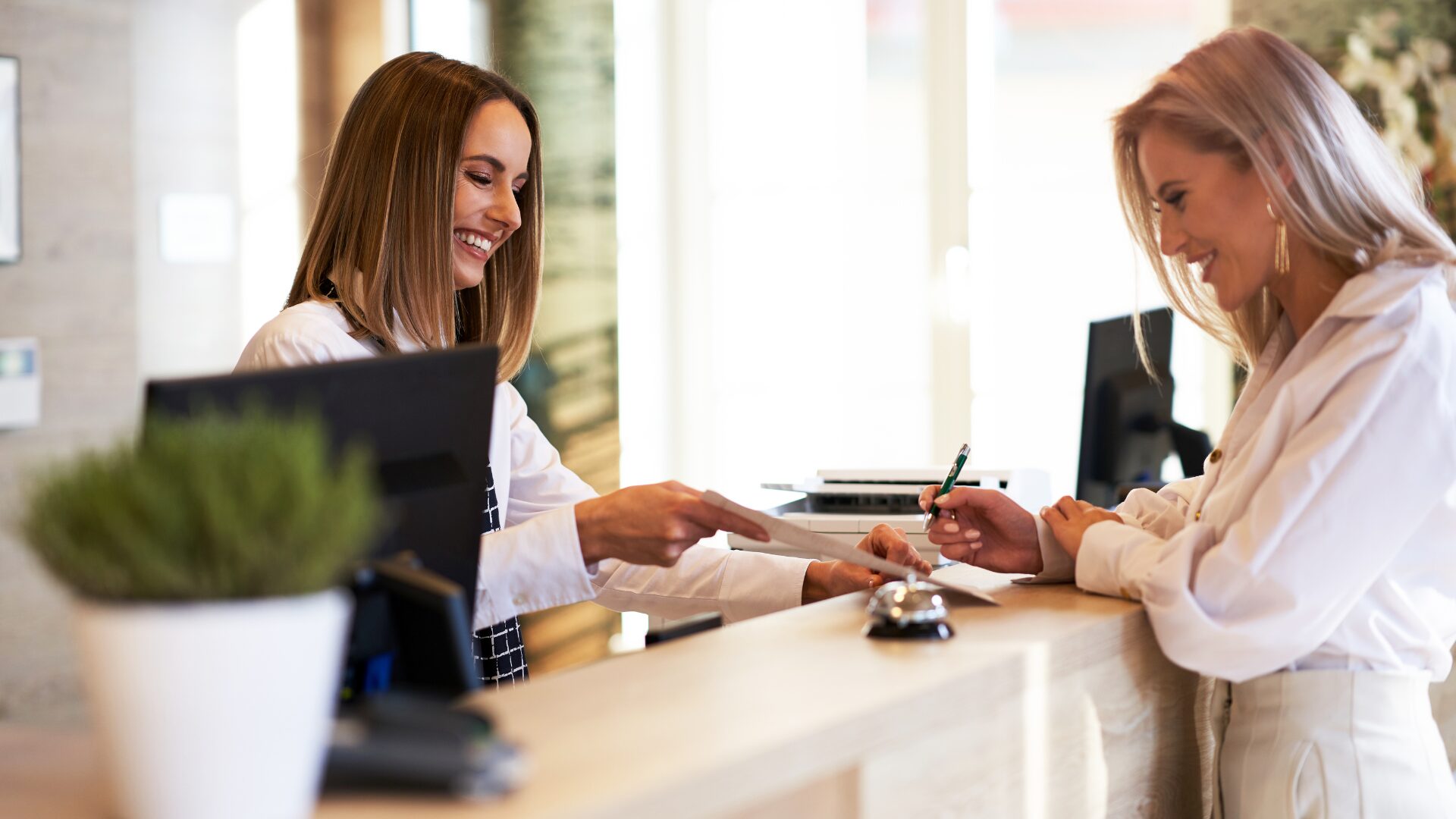
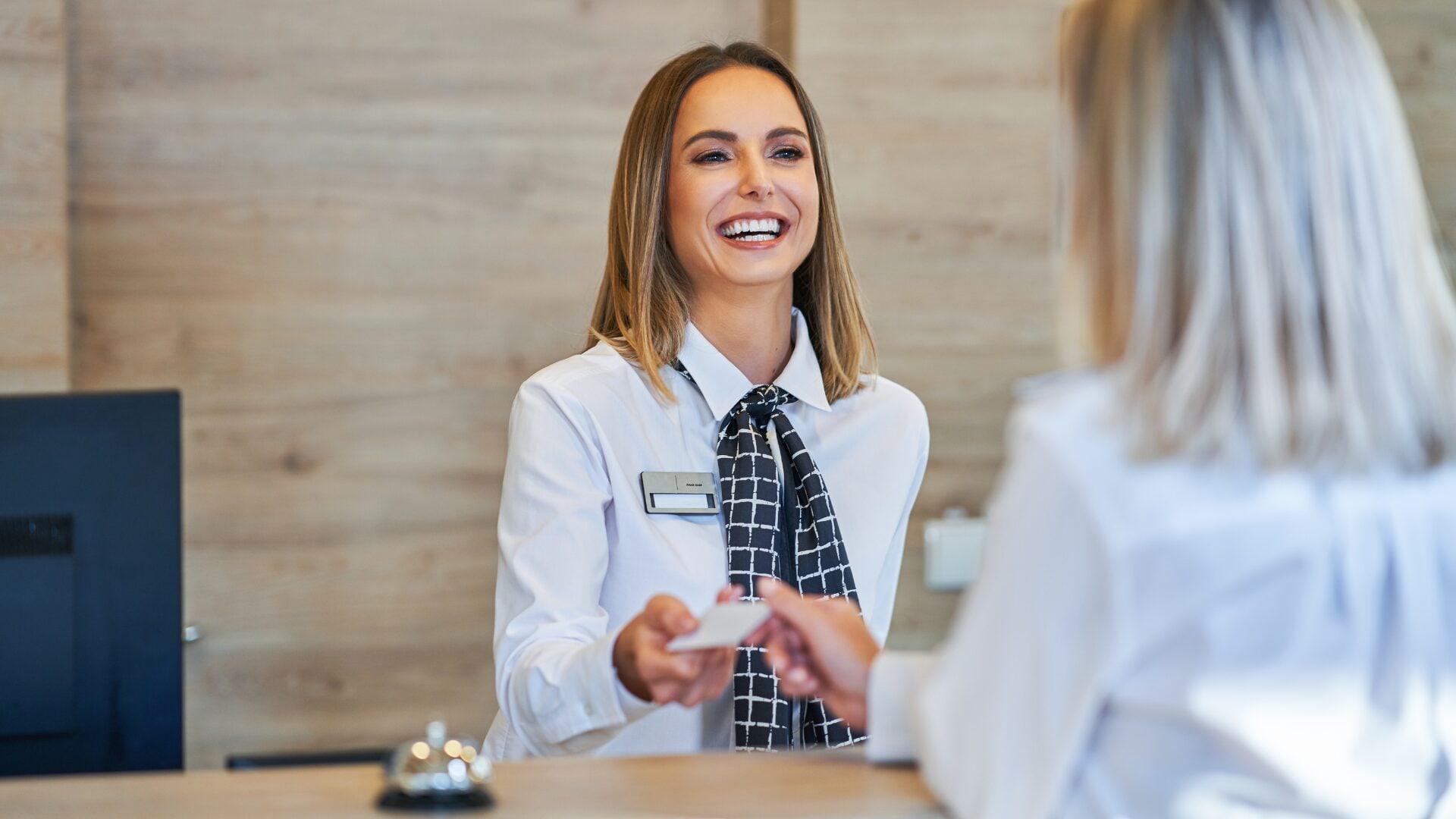
The check-in stage encompasses all of the guest’s first impressions of the hotel: airport pickup, curbside service, baggage delivery, hotel check-in, and initial impressions of the room.
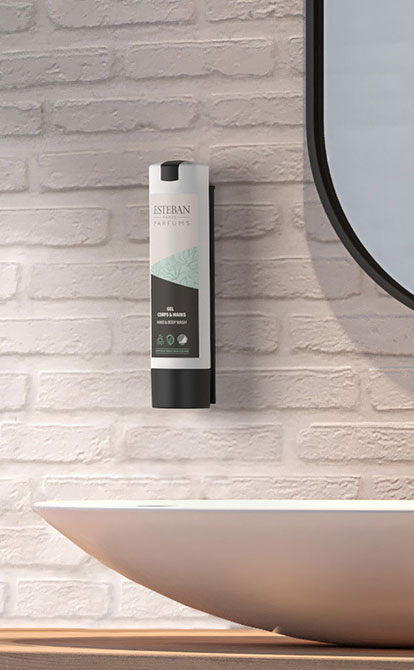
Lasting impressions are made in this stage, especially in areas like customer service and cleanliness. Elevate this moment by aligning hygiene, scent, and design: equip lobby restrooms and guestrooms with ADA Cosmetics’ SmartCare wall-mounted dispensers in your chosen fragrance to create a consistent, premium signature at the washbasin and in the shower. For brand coherence from lobby to spa, personalize label and scent with ADA Atelier so your identity is instantly recognizable at every touchpoint.
The aforementioned list of guest first impressions is a general one. The customer journey will differ from hotel to hotel. To envision the journey a customer is likely to take at their own hotel, hoteliers can envision the idealized guest persona making his way to his room.
- Are there baggage carts strategically placed by the entrance doors?
- Does he go by the hotel restaurant on his way?
- Are lobby restrooms and guestrooms fitted with dispenser solutions in the same fragrance guests will find in-room and in the spa?
- Would a discounted or free drink help encourage further business there throughout his stay?
- And so on.
6. Stay
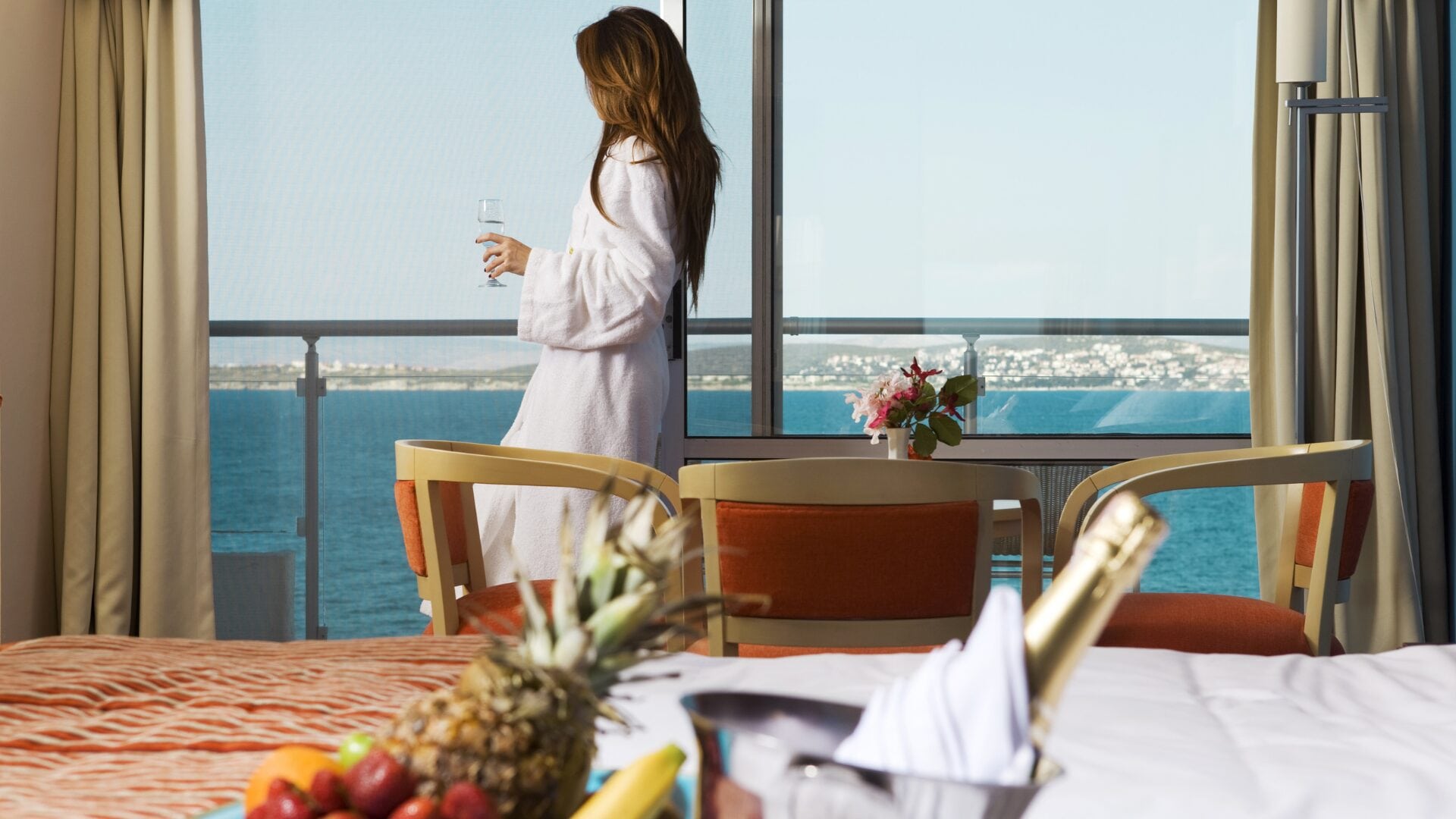
The stay stage begins once the guest has settled into her room and ends once she starts preparing to leave. This stage is the main event, in which the guest is looking to maximize her enjoyment. It is the heart of the hotel customer journey, the moment when all prior promises are put to the test.
Details decide, how the bathroom looks and feels at the first handwash, how consistent the scent experience is between room and spa, how seamlessly everything works without housekeeping “footprints.”
Delivering this level of consistency and quality requires thoughtful design and reliable amenities. Installing ADA Cosmetics dispenser systems like SmartCare at the washbasin, in the shower, and in wellness and spa areas to keep formulations and fragrances premium. Complementing this with sustainable slippers and plush cotton towels reinforces a high-quality, unified amenity experience that guests can feel – and will remember.
Moreover, about a third of guests are willing to pay more for personalized experiences. Using whatever data guests are willing to give you on their interests and goals for the trip can help you maximize potential revenue from this type of guest.
Data-gathering does not have to be intrusive. If a guest’s birthday falls within her stay, she may be open to offers from a local merchant or an in-house meal. When 97% of millennial guests report posting pictures of memorable moments while traveling on social media, a photogenic birthday gift like a cake or flowers may be more than worth its cost in advertising.
7. Check-out
This stage offers one final additional revenue-adding opportunity before the customer departs. Hotels can offer take‑home signature scents and branded personal care. These become emotion‑evoking, in‑home reminders that extend the positive hotel experience.
8. Post-stay
Check-out does not have to mean farewell. In the post-stay stage, hotels can utilize a variety of strategies to increase the likelihood of repeat business. For instance, since 2007, major hotel chains have begun using scent marketing technology to build brand identity in the memories and emotions of former guests.
Extend the sensory thread guests already associate with your brand by keeping your in-room signature present at home. Offer your chosen ADA Cosmetics fragrance so the memory of the stay remains vivid and positive.
Once this emotional connection is reinforced, convert it into action with timely reasons to return: targeted emails about promotional rates, off‑season packages, and upcoming local experiences that match guest interests. Close the loop with trust-building touchpoints – send concise satisfaction surveys and respond promptly and professionally to every review, especially critical ones – so former guests feel heard while prospective guests see a service culture worth booking again.