Hotel & Travel Trends

Why Do Hotels Smell so Good? The Benefits of Scent Marketing

17 October 2025

Scent marketing for hotels leverages the powerful link between olfactory and visuospatial learning – where a single, distinctive aroma can create memories that last for years. Research shows that our sense of smell is closely tied to how we remember places and experiences. Rather than relying solely on a catchy advertising jingle or a glossy brochure, scent marketing uses this enduring sensory link to keep your hotel vivid in the minds of your guests long after they’ve left.

What is Scent Marketing for Hotels?

First used in the hospitality industry by Hyatt Place in 2007, scent marketing refers to the intentional use of signature fragrances to shape guests’ emotional experience of a specific hotel, creating a lasting impression that builds brand identity.

For instance, walk into a luxury hotel lobby, and chances are your first impression won’t come from what you see – it will come from what you smell. The crisp, calming aroma that seems to hover in the air is no accident; it’s the result of a carefully designed strategy known as scent marketing. 

Far more than simply making a space smell pleasant, scent marketing taps into the wonderful connection between smell and memory. Studies show that none of the body’s other senses has as great a power to forge targeted connections with emotion, associative learning, and memory as does the sense of smell. This makes fragrance a potent tool for emotional branding, particularly in environments that depend on creating a sense of comfort, luxury, or home away from home. 

And by the way, Hyatt Place’s original signature scent from 2007 is still in use today, greeting guests in nearly 300 hotels across the US.

Author’s Insight

The unique but pleasant scent of cloves wafting through the air takes me back, some 25 years later, to the Javanese city where I was an exchange student. 

It’s no surprise, then, that even after a stay of just 30 days, I still strongly associate the scent of cloves with that city in Indonesia. This connection will likely remain with me for the rest of my life. 

Such is the power of unique scents to etch a place into the memory of its inhabitants, visitors, and – more and more in the hospitality industry – its customers.


Why Do Hotels Use Scent Marketing?

Hotels use scent marketing to create emotional connections, influence guest behavior, and build lasting brand loyalty through signature fragrances. The right scent can make guests stay longer, spend more, and remember the hotel long after their visit.

According to the Harvard Business Review, Hyatt Place has seen such strong returns from scent marketing that it still sends inspectors to ensure its signature aroma is consistently diffused across all properties

This aligns with Martin Lindstrom’s 2005 prediction in his ground-breaking, 2005, data-packed volume, Brand Sense: Build Powerful Brands through Touch, Taste, Smell, Sight, and Sound, that those companies that executed a multisensory marketing strategy would outperform and outcompete those that did not.

Subsequent studies of consumer behavior have since borne out Lindstrom’s prediction. A study by researchers at Washington State University found that shoppers spent 20% more when a simple scent was diffused in the air. For hoteliers, the mechanism of this effect is particularly interesting. Increased purchases were a secondary effect in the WSU study; the primary effect of the scented stores was to induce shoppers to want to spend more time there. 

If a scent alone can entice hotel guests to want to stay another night, then it is obvious why major hotel chains like Hyatt Place regard scent marketing as an especially effective element of their overall strategy. 

From bright citrus in a beach resort to warm amber in a boutique city hotel or soothing lavender in a wellness retreat, the right scent communicates a hotel’s essence faster and more deeply than visuals alone. Signature scents such as those provided by ADA Cosmetics in partnership with Actimood® create an invisible layer of atmosphere that subtly influences guest behavior, mood, and even loyalty. This transformative blend of art and science turns the simple act of walking into a lobby into a multisensory experience.

The Psychology Behind Hotel Scents

Scent is processed by the limbic system, which is the part of the brain tied to emotion and memory. That’s why a signature hotel scent can trigger an instant wave of nostalgia, relaxation, or luxury in your guests’ minds even years later. 

Unlike visual or verbal cues, smells are free of a psychological phenomenon called retroactive interference, in which older memories are essentially overwritten by newer memories. With time, it becomes harder to remember the precise color of a memorable sunset or even the sound of a loved one’s voice: Too many intervening sunsets and the daily cacophony of human voices corrupt our memory. Not so with smells. Even years later, one whiff of a loved one’s favorite perfume or the smell of astroturf is enough to transport us back to a first date or a Friday night under the lights. 

APS Fellow at the Monell Chemical Senses Center in Philadelphia, Johan Lundstrom, postulates that there is something unique about the way in which the brain learns to recognize odors. Observing that while it takes many trials before a person will associate a verbal cue with a negative emotion, Lundstrom notes that it takes just two or three associations with a particular odor for an emotion to stick

When a guest enters a hotel and inhales a specific fragrance, their brain processes that scent almost instantly, linking it to the feelings and environment surrounding the experience. This emotional shortcut allows hotels to influence how guests feel before they even approach the front desk.

Scent is also known to affect behavior. In consumer studies across six major markets, Symrise Consumer Fragrances found that certain fragrances can calm nerves, reduce stress, and even encourage specific actions. Making targeted use of raw materials with proven effects on the limbic system, Symrise found they could evoke specific emotional states such as energy, well-being, sensuality, self-confidence, or relaxation, to name just a few. These carefully curated aromas aren’t chosen arbitrarily – they’re backed by research into how particular scent profiles impact mood and perception.

When combined with audiovisual cues, scent is a powerful tool to build brand recognition and emotional attachment in customers’ memories. Studies have found that people can identify fewer than half of the odors of household items they use daily. But when the scent is paired with a visual cue, people almost always correctly identify the item

Paired with a signature jingle or logo, a specific experience or place, a hotel’s trademark scent can become a recognizable part of its identity. Guests who associate a certain fragrance with a positive hotel experience are more likely to return – and even more likely to purchase a branded room spray or candle to recreate that atmosphere at home. In this way, the psychological power of scent extends well beyond the hotel stay, building emotional equity that strengthens guest loyalty and enhances the overall brand image.

Benefits of Scent Marketing for Hotels

Scent marketing offers hotels a powerful, multi-layered advantage that extends far beyond pleasant aromas. 

1. Enhances the Guest Experience

First and foremost, it enhances the guest experience by creating an inviting and memorable atmosphere. A carefully curated fragrance instantly sets the right tone, preparing guests for the experience to come – luxury, tranquility, adventure, or something else – and sets the hotel up to meet and exceed guest expectations. 

2. Influences Mood and Behavior

Second, strategically chosen scents help guests feel more relaxed, welcome, and emotionally connected to the space, influencing guest behavior. Calming fragrances reduce anxiety in busy lobbies or spa areas, while energizing aromas create a sense of vitality in fitness centers or meeting rooms. Scents-as-cues can be just the soft and subtle touch that contribute to smoother guest interactions and improved satisfaction throughout the hotel.

3. Builds Brand Recognition and Loyalty

Third, scent marketing builds long-term brand recognition and loyalty. A signature scent is a silent ambassador of the hotel’s identity, lingering in the guest’s memory long after checkout. It encourages repeat visits and can even create new revenue streams through the sale of branded candles, diffusers, or room sprays that help guests recreate and reinforce the hotel’s sensory experience at home.

In short, scent marketing offers hotels a sensory differentiator that is both emotional and strategic. It transforms a standard stay into a memorable brand encounter, one that guests can quite literally follow with their noses.

What Makes Hotels Smell so Good?

The unmistakable, luxurious scent that greets guests in upscale hotels is rarely accidental, it’s the result of precise formulation, high-quality ingredients, and advanced diffusion technology. 

Many hotels partner with professional fragrance houses to develop custom scents that align with their brand identity and target demographic. With ADA Atelier, hotels can go one step further – selecting a preferred fragrance profile and designing a bespoke label.

To ensure these fragrances are evenly and subtly distributed throughout the property, hotels can install dispenser solutions at the washbasin, in the shower, and across wellness and spa areas. The result is a seamless olfactory experience – clean, distinctive, and ever-present without being overwhelming.

Guest Perspective: The Scent Experience in a Hotel in Tulum, Mexico

“I Still Smell Tulum”

Eva (29) from Heidelberg, Germany, still vividly remembers her stay at a boutique hotel in Tulum – and not just for the jungle views. What left the deepest impression? The scent.

Q: Can you describe how the hotel’s scent influenced your perception of the place?

Eva: It actually started right in the lobby. Even though it was open-air, the scent just kind of hit you the moment you arrived. It was this mix of orange, cedarwood, and verbena – fresh, but super calming. I remember just standing there for a second, taking it all in. I instantly felt relaxed, like my vacation had officially begun. It was like the hotel knew exactly how to make you feel welcome without even saying a word.

Q: Did the scent make the hotel experience feel more memorable or special compared to others you’ve stayed at?

Eva: Absolutely. I’ve traveled a lot, I’ve been to over 20 countries, but I’ve never experienced a scent that defined a hotel the way it did there. It just made everything feel so unique. That smell, that feeling, it really stuck with me.

Q: Now that some time has passed, do you still associate that scent with your stay in Tulum? Has it stayed with you?

Eva: It’s been almost three years now, but yeah, whenever I catch a similar scent, it takes me right back to that peaceful feeling in the jungle. It’s crazy how powerful that is. Just one whiff and I’m in Tulum again. I guess… I still smell Tulum.

Q: Do you think the scent influenced how you remember the hotel overall, even more than the design or location?

Eva: Honestly, it’s kind of crazy, I feel like the scent had such a positive effect on my mood that I remember the whole stay as just amazing. Whenever someone tells me they’re heading to Tulum, I’m like, you have to stay at that hotel! I can’t even say for sure if everything was objectively perfect, or if the scent just made me feel so good that it shaped the whole experience. But in the end, that’s what it’s all about, how a place makes you feel.

Q: Do you think more hotels should invest in signature scents?

Eva: Definitely. There are so many different scents out there, and it’s such a unique way for a hotel to stand out. It’s almost a shame that we don’t consider all of our senses more when it comes to hospitality. Scent has such a huge impact on how we feel and what we remember. I really think more hotels should explore that.

Examples of Iconic Hotels that Use Hotel Scenting

Many world-renowned hotel brands have embraced scent marketing since Hyatt Place first made its mark in 2007. Some have even become famous. 

  • The Westin Hotels & Resorts, for example, is widely recognized for its signature “White Tea” scent – a crisp, uplifting blend of white tea, geranium, and cedarwood. This fragrance is diffused throughout lobbies and common areas, creating an immediate sense of calm and cleanliness that guests associate with the brand’s wellness-forward image.
  • Similarly, Edition Hotels, part of the Marriott portfolio, utilize a more sultry and sophisticated scent that reflects their upscale, boutique style. Their blend typically includes black tea, bergamot, and hints of leather – evoking a feeling of modern luxury.
  • The Ritz-Carlton also invests in custom scenting, with each property having the flexibility to adopt scents that complement its unique character while maintaining the brand’s overarching tone of refined elegance.

Implementing Scent Marketing with ADA Cosmetics

ADA Cosmetics offers hotels a distinct opportunity to elevate the customer journey through branded amenity collections infused with mood-enhancing fragrances. Our signature lines incorporate Actimood® technology, developed in collaboration with Symrise, which uses scientifically proven scent profiles to boost feelings of well‑being, such as relaxation, energy, or happiness.

The Yon‑Ka collection, for example, is a calming lavender blend infused with citrus, cardamom, eucalyptus, rosemary, and cedarwood. It was designed to relieve stress and enhance sleep quality, an ideal choice for indoor wellness experiences and spas.

Our Element_ry line is a woody‑green scent designed to promote general well‑being and lift your spirits.

ADA’s Cosmetics’ Naturals is all about Mediterranean-inspired wellness. It spotlights “Orange Bliss,” a vibrant citrus‑woody fragrance rooted in vegan botanicals to help create a bright, uplifting ambiance in public areas.

Other brands in ADA Cosmetics’ portfolio, like The Curious Botanist and Pure Herbs, feature botanical scents that might be interesting for health spas or guests who are particularly earth-focused. These blends put an emphasis on natural ingredients and sustainability.

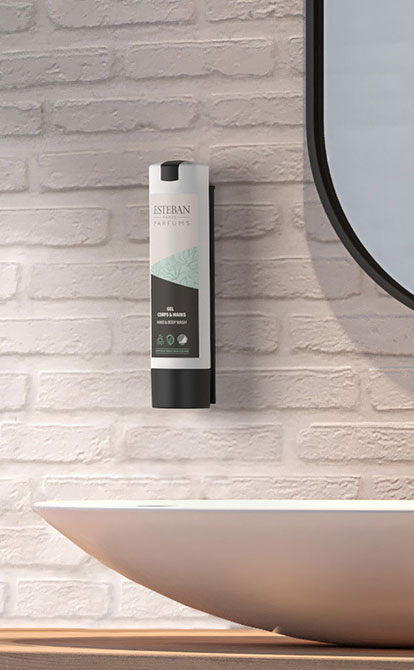
ADA’s scented products with the hygienic SmartCare dispenser to showcase consistent sustainability and premium sensory branding – uplifting guests and subtly strengthening your hotel’s identity.

FAQ

What is the power of scent marketing?

Scent marketing taps into the powerful link between smell, memory, and emotion. Because scent is processed by the brain’s limbic system, responsible for emotion and memory, it creates immediate, lasting impressions. In hospitality, a signature scent can evoke emotions of comfort, luxury, or wellness that will shape how guests feel from the moment they first arrive. Studies show people remember smells with greater accuracy and for longer periods than visuals or sounds. Thus, scent can be used as a strategic tool for brand recognition. Ultimately, scent marketing is supposed to create a memorable atmosphere, influence mood and behavior, and deepen emotional connections with the brand.

Why do hotels smell so good?

Hotels’ signature scents are typically professionally crafted fragrance blends diffused via high-tech systems. These custom scents are developed to reflect the hotel’s brand identity and vibe. Commercial scent diffusers distribute these aromas evenly through HVAC systems or standalone units that ensure consistency without being overpowering. High-end hotels also maintain strict housekeeping standards and use fragrance in amenities, linens, and lobby treatments to create a unified atmosphere and sensory environment. For amenities-led scenting, many properties choose ADA Cosmetics’ scented lines and hygienic SmartCare dispensers to deliver a consistent signature at the washbasin, in the shower, and across spa areas.

What are common hotel scents?

Common fragrance profiles are reminiscent of comfort, cleanliness, and sophistication. They often include notes of white tea, green tea, citrus (especially bergamot or mandarin), sandalwood, lavender, cedar, and jasmine. Luxury hotels may use more complex blends with hints of leather, amber, or spice to stand out from others. Wellness retreats and spas favor scents like eucalyptus, rosemary, and chamomile for their calming effects. 

Hotels select their scents not only based on pleasantness but also according to their respective psychological effects: they may be energizing, relaxing, or uplifting for guests and contribute to an overall better customer journey.

CONTACT
REQUEST AN OFFER

For product inquiries worldwide, please contact our sales partners.

CONTACT

For contact inquiries of all kinds, please use our contact form. We will get in touch with you as soon as possible.