Hotel Management

The Eco-Friendly Hotels Guide: A 2026 Playbook for UK Hoteliers

26 June 2026

Eco-Friendly Hotels Guide: Overview

  • The UK government’s legally binding net-zero target by 2050 applies to every sector, including hospitality. Hotels account for up to 15% of UK greenhouse gas emissions and spend £1.3 billion a year on energy.
  • “Eco-friendly” is now a legal claim, not just a marketing label. Since April 2025, the Competition and Markets Authority can fine businesses up to £300,000, or 10% of global turnover, for misleading green claims.
  • A net-zero hotel is not the same as a carbon-neutral or eco-friendly hotel. Each term means something different.
  • The bathroom is where energy, plastic waste and laundry chemicals all come together in one square metre of floor space.
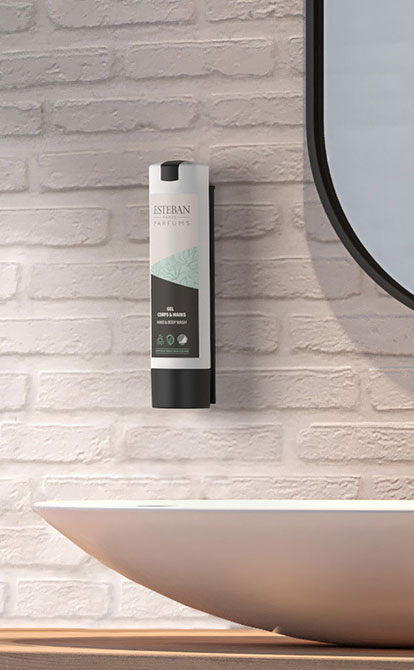
  • Switching from mini-bottles to sealed, refillable dispensers cuts plastic waste, removes a known hygiene risk, and stops a common guest complaint.

What Makes a Hotel Eco-Friendly in 2026?

An eco-friendly hotel is one that has reduced its environmental impact more than the average hotel and can provide evidence of this. The keyword is proof. A hotel that has swapped its light bulbs and put a card by the towel rail is not, by today’s standards, eco-friendly. It is just not as far behind as it used to be.

According to the CMA Green Claims Code, a claim like “eco-friendly” needs three things to be credible:

  • Measurement: You know your starting-point figures for energy, water and carbon
  • Action: You have made real changes based on those figures
  • Verification: An outside body has confirmed both

Take away any one of those three, and you have a marketing claim, not an environmental one.

Certifications that provide that outside proof in the UK include Green Tourism, EarthCheck, ISO 14001, and the EU Ecolabel for Tourist Accommodation. For products you buy, such as toiletries, cleaning supplies and paper, look for Cradle to Cradle Certified, Nordic Swan Ecolabel, EcoCert Cosmos Organic, and Fairtrade.

The Business Case for Sustainable Hotels in the UK

Going green is no longer about image. It is about your bills, your legal risk, and whether guests can find you.

The Climate Change Act 2008 commits the UK to net zero by 2050. The UK Net Zero Strategy breaks that down into targets for every industry. Hotels account for up to 15% of UK greenhouse gas emissions and spend £1.3 billion a year on energy. Those costs will not come down on their own.

Two laws are already costing hotels money:

Guest behaviour is shifting too. Three in four travellers say they want to travel more sustainably, and 83% say sustainability matters to them.

For bookings, the numbers are just as striking: 65% say they would feel better staying at a certified property, and 59% want to filter their search results by sustainability certification. Certification is shifting from a badge on a wall to a search filter. If you do not have it, you may not show up.

There is a UK-specific issue that makes this even more pressing:

  • 80.5% of UK hotel stays are single-night stays, one of the highest rates among the countries studied.
  • More one-night stays mean more check-ins and check-outs, more laundry, more restocking, and more energy spent heating rooms that were empty the night before.
  • UK hotels produce more carbon per booking than hotels in countries where guests stay longer.

In short: UK hotels face pressure from three sides at once: tightening laws, rising energy costs, and guests who now filter searches by sustainability certification.

What Is a Net Zero Hotel?

According to the Greenhouse Gas (GHG) Protocol, a net-zero hotel is one where the greenhouse gases it produces are fully balanced by an equivalent amount removed from the atmosphere. The total carbon added to the air is zero. But that only means something when you know which parts of the business are counted.

The GHG Protocol divides emissions into three groups called scopes:

Scope What it covers Examples
Scope 1 Emissions directly from things the hotel owns or runs Gas boilers, hotel-owned vehicles, refrigerant leaks
Scope 2 Emissions from the energy the hotel buys Electricity, with the carbon level depending on how the grid generates it
Scope 3 Emissions from everything else in the supply chain Making the shampoo bottles in the bathroom, the flight guests took to get there

Two other terms worth knowing:

  • Carbon neutral usually means that any remaining emissions, after cuts have been made, are offset by buying carbon credits.
  • Whole-life net zero includes the carbon produced when the building was constructed, not just the carbon used to run it day-to-day.

Examples of Net Zero Hotels in the UK

Three recent examples show what net zero looks like when it is actually done.

Radisson Hotel Manchester City Centre

Radisson Hotel Manchester City Centre was one of the first two hotels in Radisson Hotel Group’s Verified Net Zero programme, launched in May 2025. To qualify, a hotel must run on 100% renewable energy, serve low-carbon food, and keep waste to a minimum. All three emission scopes are checked by an independent body.

room2 Chiswick

room2 Chiswick calls itself the world’s first whole-life net-zero carbon “hometel”, a mix of hotel and apartment. It was built to use 89% less energy than a typical UK hotel, and the carbon produced during construction was counted from day one.

voco Zeal Exeter Science Park

voco Zeal Exeter Science Park opened in March 2025 as IHG’s first net-zero hotel in the UK, with 142 rooms. Here is what makes it stand out:

  • Holds BREEAM Outstanding certification
  • Built to the Passivhaus standard
  • Energy Use Intensity of less than 60 kWh per square metre
  • Uses CO₂ heat pumps with a global warming potential of just 1
  • Its concrete mix, Ecocrete, produces up to 85% less CO₂ than standard cement

All three properties have something in common. None of them just claims to be green. All three are measured and checked against clear technical standards.

Avoiding Greenwashing in 2026: What the CMA Green Claims Code Means for UK Hotels

The Competition and Markets Authority (CMA) is the UK’s regulator for fair trading and consumer protection. In 2021, it published the Green Claims Code, which sets six rules for any green claim made by a UK business.

Every green claim must be:

  • Truthful and accurate
  • Clear and easy to understand
  • Not leaving out important information
  • Fair when making comparisons
  • Based on the full life of the product or service
  • Backed up with solid, up-to-date evidence

Since 6 April 2025, the Digital Markets, Competition and Consumers Act 2024 has given the CMA the power to fine businesses up to £300,000, or 10% of their global annual turnover, for misleading green claims.

Claim What you need to do
“Eco-friendly” Back it up with a named certification or specific, measurable figures. Saying it on its own is not enough.
“Net zero” Say which emission scopes are covered. “Net zero” on scopes 1 and 2 only is not the same as full net zero.
“Carbon neutral” Show how much is being offset and what type of carbon credits you are using. Offsets alone are not enough.
“Sustainable” products Name the certification: Cradle to Cradle Certified, Nordic Swan Ecolabel, EU Ecolabel, EcoCert Cosmos Organic, or Fairtrade.

Write down everything, only claim what you can prove, and make the evidence easy to find.

In short: Vague green claims now come with real fines in the UK. Name the certification. Show the numbers. Keep everything up to date.

Where Your Biggest Costs Are Hiding

Knowing where costs are highest is the first step to bringing them down.

Area Key fact Where to start
Heating Heating is responsible for more than 40% of energy use in non-domestic UK buildings. Stick to the recommended temperature ranges below.
Lighting LED bulbs cut energy use by up to 70%. Motion sensors in corridors cut lighting energy by 30 to 50%. Most of these pay for themselves within two to three years.
Water The average hotel uses around 1,500 litres per occupied room per day. Low-flow showerheads and thermostatic taps.
Bathroom products Mini-bottles, soap bars, cotton items and slippers make up the biggest single-use plastic stream in any guest room. Switch to sealed refillable dispensers.

Recommended room temperatures:

Room type Recommended temperature
Guest bathroom 26-27°C
Guest bedroom 19-21°C
Restaurant and dining room 22-24°C
Kitchen 16-18°C

Heating rooms above these temperatures, which many hotels do in winter, is a direct and avoidable cost.

The bathroom is worth a close look. Showers use more hot water than any other use in a guest room. Mini-bottles and individually wrapped products are the biggest sources of single-use plastic. Towel and linen changes drive both water use and the amount of laundry chemicals used.

The Eco-Friendly Hotels Guide: 7 Steps for UK Sustainable Hotels

Follow these 7 steps for building a greener future in UK hospitality and delivering a genuinely sustainable guest experience.

1. Find Out Where You Are Starting From

You cannot cut what you have not measured, and you cannot defend a claim you have not checked.

The Hotel Carbon Measurement Initiative (HCMI), run by the Sustainable Hospitality Alliance, is the standard tool for calculating your scope 1 and 2 emissions, plus some scope 3 areas such as outsourced laundry.

Run an energy, water and waste audit every year and measure it against a fixed starting point. Without that, any claim you make is a guess.

2. Switch to Renewable Energy and Cut Your Heating Costs

Switching to a 100% renewable electricity tariff backed by Renewable Energy Guarantees of Origin (REGOs) deals with your scope 2 emissions.

Cutting your heating costs is harder. Most UK hotels still run on gas boilers, and replacing them costs money. The most common route is to install air-source or ground-source heat pumps, ideally alongside better insulation.

3. Use Less Hot Water

Hot water made up about a fifth of total energy use in IHG’s UK hotel study. Bathrooms, kitchens and laundry are where most of that goes, and all three are worth looking at.

Under the EU Ecolabel for Tourist Accommodation, taps and showerheads should flow at no more than 9 litres per minute. Low-flow showerheads, thermostatic taps and enclosed shower screens can all make a real difference.

4. Cut Food Waste

UK hospitality throws away food that costs the industry around £3.2 billion a year. That food has already used energy, water and packaging to produce, move and store.

  • Order food in smaller, more regular amounts to reduce spoilage
  • Adjust portion sizes based on what guests actually eat
  • Offer takeaway boxes for unfinished meals
  • Use refillable containers at breakfast for cereals, jams and yoghurt
  • Track food waste daily with the free Guardians of Grub calculator

5. Get Rid of Single-Use Plastic

The list of single-use plastics in a typical hotel bathroom is long: mini-bottles of shampoo and conditioner, individually wrapped soap bars, sachets, plastic-wrapped cotton products, disposable slippers.

  1. It cuts your plastic waste dramatically: A 200-room hotel at 70% occupancy, giving guests three mini-bottles each night, gets through roughly 153,300 plastic bottles a year from that one product alone.
  2. It removes a known hygiene risk: Research has found harmful bacteria in 25% of hotel soap dispensers tested. Sealed cartridge dispensers remove that risk entirely.
  3. It stops a common guest complaint: Whether that is an empty bottle at check-in or a dirty dispenser between stays.

ADA Cosmetics’ Smart Care system uses sealed cartridges independently tested for hygiene by Hochschule Rhein-Waal.

6. Set Standards for What You Buy

The things you buy and the companies you buy them from are part of your carbon footprint. Set out clearly what certifications your suppliers must hold and ask them to show proof.

Category What to look for
Toiletries and amenities Cradle to Cradle Certified, EcoCert Cosmos Organic, Vegan Society, Fairtrade
Paper products FSC (Forest Stewardship Council)
Supplier ESG EcoVadis rating, ISO 14001, ISO 50001
Eco-design Nordic Swan Ecolabel, EU Ecolabel

Buying from certified suppliers also means they are doing part of the work for you when it comes to meeting your own sustainability targets.

7. Only Claim What You Can Prove

Whatever you say about your green credentials needs to be backed up with the certification or data that supports it. Name the certification, not just the category. Be specific about what the claim covers: which emissions, which properties, which years.

Eco Toiletries for UK Hotels: Why the Bathroom Is the Best Place to Start

The guest bathroom is where a UK hotel’s biggest avoidable environmental costs converge and where you can act on them fastest.

  1. Hot water for showers is the single highest energy cost in any guest room
  2. Single-use products generate a constant stream of plastic waste
  3. Every wash of towels and linen draws on water and chemicals

Tackle this one room and you cut cost, carbon and waste at the same time.

For instance, move from mini-bottles to sealed, refillable cartridges with ADA Cosmetics. Our dispenser systems replace hundreds of small plastic bottles per room each year with hygienically sealed cartridges that your housekeeping team simply refills.

The benefit is threefold: markedly less plastic waste, a lower spend per guest, and a consistently premium look at the basin and in the shower. Independently verified for hygienic safety by the Hochschule Rhein-Waal, the systems protect both your guests and your reputation while you reduce single-use plastic.

At ADA Cosmetics, our core range is Cradle to Cradle Certified Silver, giving you a transparent, third-party-backed benchmark you can stand behind with confidence.

Ready to make your bathrooms your strongest sustainability statement? Tell us about your property and our team will recommend the right dispenser system and amenity range for your hotel.

FAQ

How is "eco-friendly hotel" different from "sustainable hotel" and "green hotel"?

People often use these terms interchangeably. But under the CMA Green Claims Code, each one has to be justified on its own:

  • “Eco-friendly” means the hotel has reduced its environmental impact.
  • “Sustainable” means the hotel can keep running at its current level without damaging the natural systems it relies on.
  • “Green hotel” is the least specific of the three. Without supporting evidence, this term is most likely to be questioned.

How does a hotel avoid greenwashing?

Follow the CMA Green Claims Code. Every claim needs to be honest, specific, and backed up by evidence that covers the full life of the product or service.

  • Measure where you are starting from before making any claims
  • Get an independent body to certify your progress, rather than self-certifying
  • Be specific. “Our UK hotels cut scope 1 and 2 emissions by 35% since 2021” is provable. “We care about the planet” is not.
  • Review and update your evidence every year

Which green certifications matter most for UK hotels in 2026?

Certification What it covers Best suited to
Green Tourism Property-level performance, Gold / Silver / Bronze UK hotels of all sizes
EarthCheck Property-level, recognised internationally Luxury and international groups
BREEAM Building performance New builds and major refits
EU Ecolabel for Tourist Accommodation Recognised across EU markets, used in many supply chain requirements Hotels with European business
Cradle to Cradle Certified Full product life cycle: safety, recyclability, energy, water, fairness Toiletries and products
EcoCert Cosmos Organic Organic and natural ingredients Toiletries and cosmetics
Nordic Swan Ecolabel Eco product design Toiletries and products
Fairtrade Ethical supply chain Food, drink and toiletries
EcoVadis Gold or Platinum Company-wide ESG performance, independently assessed Checking your suppliers
CONTACT
SHOP NOW

Buy ADA Cosmetics products in our online shop.

REQUEST AN OFFER

For product inquiries worldwide, please contact our sales partners.

CONTACT

For contact inquiries of all kinds, please use our contact form. We will get in touch with you as soon as possible.