Hotel & Travel Trends

How to Refill a Soap Dispenser in Hotels

17 June 2026

How to Refill a Soap Dispenser: Overview

  • Manually refilling soap dispensers involves several steps and can lead to contamination, product waste, and difficulties tracking products.
  • Automated soap refill stations reduce these risks by using sealed containers, simple refill steps, and automatic product tracking.
  • ADA Cosmetics Refillution is the hospitality industry’s first patented, fully automated soap-refill system.
  • Refillution can reduce plastic waste by up to 95%, cut operating costs by up to 30%, and provide full regulatory traceability without adding extra work for housekeeping teams.

How to Refill a Soap Dispenser: The Manual Method

For hotels using dispenser systems, refilling liquid soap usually involves six manual steps:

  1. Check the fill level
    During each housekeeping round, staff check the soap level in the dispenser. When the soap is running low, the dispenser needs to be refilled.
  2. Remove the dispenser from its wall mount
    Most wall-mounted dispensers are secured with a lock. Staff use a special key to unlock the bracket that holds the dispenser in place. The bottle is then pulled down along the guide rail and removed.
  3. Open the dispenser
    Open the cap or lid to access the internal container that holds the liquid soap.
  4. Pour in the refill product
    Refill products are usually supplied in bulk in larger containers. For example, ADA Cosmetics offers refill packs in 1-, 3-, 5- and 10-litre sizes. Staff carefully pour the soap from the refill container into the dispenser by hand.
  5. Reseal and reinstall
    Close the dispenser securely, return it to the wall mount, and insert it until the bottle is clicked into the bracket. Confirm that it’s firmly locked in place.
  6. Record the refill
    Staff write down the product’s batch code on a refill record template. The batch code identifies when and where the product was produced, which helps with product tracking and hygiene compliance. 
To make this step more controlled, ADA Cosmetics offers a 5-litre SmartCube with an integrated pump. Instead of pouring from an open container, staff use the built-in pump to transfer the soap directly into the dispenser, reducing spills, product waste, and exposure to the surrounding environment. The SmartCube is a practical option for smaller hotels that want to improve their manual refill process without investing in a fully automated system.

The Limitations of Manual Refilling

Manual refilling works, but it has several limitations that hotels should consider before using it across an entire property.

  • Contamination risk
    Each time a dispenser is opened, and soap is poured from another container, its interior is exposed to the surrounding environment. Airborne bacteria, dust, and contact from hands or surfaces can enter the product.
  • Product waste
    Pouring soap by hand is not precise. Spills are common, and some product may be left on surfaces or lost during the transfer. The wasted product increases operating costs over time.
  • Inconsistent fill levels
    Without a controlled dosing system, which is a mechanism that measures the exact amount of product dispensed, staff may overfill or underfill dispensers. It can lead to unnecessary product use or dispensers running empty too quickly.
  • Traceability gaps
    Recording batch codes by hand relies on staff remembering to do so. A batch code identifies when and where a product was produced. In busy hotels, this step can easily be missed, making it harder to track products and meet EU and UK cosmetic safety regulations.
  • Time cost
    Manual refilling requires several steps for every dispenser in every room. In a 200-room hotel, repeating this process daily can take a significant amount of staff time.

For many hotels, these limitations are a good reason to consider a more controlled and efficient refill system.

From Manual to Automated: Introducing ADA Cosmetics Refillution

ADA Cosmetics Refillution is the hospitality industry’s first automated soap refill system. It is patented, designed specifically for hotel operations, and created to solve the common problems of manual refilling.

With manual refilling, hygiene and product tracking depend on careful handling and accurate record-keeping. Refillution automates these steps, helping hotels refill dispensers more safely, consistently, and efficiently.

How to Refill a Soap Dispenser with Refillution

Refillution uses an automated refill station that housekeeping teams use between their room rounds. Here is how it works:

  1. Check the dispenser fill level
    During the housekeeping round, identify dispensers that are running low and need refilling.
  2. Remove the dispenser from the wall mount
    Use the dispenser key to unlock the wall bracket and remove the bottle.
  3. Bring the dispenser to the soap refill station
    Place the dispenser on the housekeeping trolley and wheel it to the refill station in the service area. Staff save time and reduce the risk of injury by keeping heavy refill containers out of guest rooms.
  4. Prepare the soap refill station
    Scan the DMC code on the 10-litre container. A DMC code (Data Matrix Code) is a small square barcode that stores product information. Scanning it records the batch number, product type, and brand, helping track the product and preventing errors.
  5. Load the container
    Place the 10-litre container into the station and connect it using the refill tube. When it is correctly connected, it clicks into place.
  6. Scan the dispenser bottle
    Each dispenser has its own DMC code. Scan the bottle before refilling. The system checks that the dispenser and the product match. If they do not match, the refill will not start, preventing the wrong product from being used.
  7. Fill the dispenser automatically
    The refill station fills the dispenser with the exact amount of soap. The process is hygienic and precise, with no manual pouring or spills.
  8. Close and return the dispenser
    Close the dispenser and return it to the guest bathroom. Insert it into the wall bracket until it clicks into place and check that it is securely locked.

The process is faster, cleaner, and fully recorded by the system, with no extra paperwork or housekeeping tasks.

What Are the Benefits of Refilllution?

The main question hotels ask about soap refill systems is hygiene. It’s a valid concern and deserves a clear answer.

The risk isn’t from refilling itself – it comes from open containers, messy handling, and lack of consistent steps. Pouring soap from an open container into an open dispenser creates exactly these risks. Refillution was designed to remove them completely.

1. Safer Hygiene with a Fully Sealed System

Refillution keeps the soap sealed from the container to the dispenser. The product never comes into contact with air or surfaces, and there is no open pouring or contact that could allow bacteria or dust in.

This is what’s known as a “closed system” or “sealed system” – the soap remains completely contained as it moves from the refill container to the dispenser, eliminating contamination risks.

Inside the Refillution refill machine, a peristaltic pump moves the soap through a sealed tube, keeping air and liquid separate. One-way valves stop backflow and drips, protecting the product at every stage.

Independent testing by Rhine-Waal University of Applied Sciences (Germany) confirmed that refilling is completely hygienic when using a controlled, closed system like Refillution.

2. Built-In Product Tracking

Hotels also need to comply with regulations on batch tracking, which means knowing which soap was used, where, and when.

Refillution solves this with a dual-DMC code-scanning system. A DMC code is a small barcode that stores product information. Each refill automatically records the soap batch, the dispenser, and the time it was filled. There is no paperwork, no mistakes, and no guesswork. Full tracking happens automatically.

Key regulatory requirements include:

Refillution ensures full compliance automatically, removing the risk of human error in record-keeping.

3. Lower Costs and Faster Operations in a Single Step

Refillution fills a 300 ml dispenser in seconds, replacing a long, multi-step manual process with a simple, automated one. Housekeeping teams notice the difference immediately, with fewer steps, less handling, and faster room turnaround.

The station’s HMI display shows fill levels at a glance. Dosing can be controlled using a hand dial or foot pedal, and LED guides help ensure precise filling every time.

Refillution also reduces product waste by up to 30 per cent. Less packaging means fewer deliveries, less storage space, and less waste to manage. Hotels save time and money, with operating costs reduced by up to 30 per cent.

4. Measurable Environmental Impact

Refillution makes sustainability measurable and easy to understand. Hotel operators, guests, and certification bodies increasingly expect clear evidence of environmental benefits.

Key benefits include:

  • Compliance with UK environmental legislation – Supports the Environment Act 2021 and the Plastic Packaging Tax, which makes single-use plastic more costly.
  • Supports ESG reporting – Helps hotels provide evidence of sustainability for corporate travel buyers and guests who want proof, not just ambition.
  • Significant reduction in plastic waste – One 10-litre Refillution container replaces 34 individual dispenser bottles, reducing plastic by up to 95 per cent. That’s about 4.5 kg of plastic saved per room per year.
  • Impact scales across a property – In a 200-room hotel, the plastic savings are substantial. Across a hotel group, the reduction can be transformative.
  • Recognised for sustainability – Refillution was a finalist for the German Sustainability Award 2025.
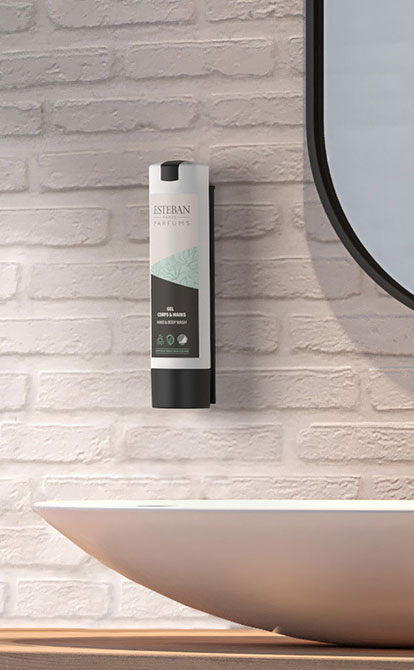
ADA Cosmetics Soap Refill System

Refilling hotel soap dispensers does not have to be a hygiene risk or a compliance concern when the right system is used. The traditional manual soap refill method works in small-scale settings, but as hotels grow, its limitations become clear: risk of contamination, inconsistent records, and unnecessary product waste.

ADA Cosmetics offers two paths forward, depending on the size and needs of the property:

  • The 5-litre SmartCube with pump: a controlled, manual refill solution for smaller hotels that want to reduce waste and improve hygiene without investing in automation.
  • The fully automated Refillution station: the industry’s only patented, automated soap-refill system for properties that need maximum efficiency, traceability, and environmental impact at scale.

Both solutions are part of our ecosystem and work with ADA Cosmetics’ full range of dispenser systems. However, Refillution changes the game. It is the only automated hotel soap refill system that combines:

  • Closed-system hygiene to protect the soap from air, surfaces, and contact contamination
  • Dual-code traceability to record batch, dispenser, and refill time automatically
  • Verified environmental benefits with measurable reductions in plastic waste

All of this is delivered through a fast, simple liquid soap refill process that is far easier than manual decanting. Using a soap refill station, housekeeping teams can check fill levels, scan codes, and refill dispensers accurately in seconds.

If your property is ready to move from manual to professional, contact your local ADA Cosmetics representative. They will guide you in selecting the right system for your operation, with no obligation and no cost.

FAQ

Is refilling hotel soap dispensers hygienic?

Yes, when a closed, standardised system is used. An independent study by Rhine-Waal University of Applied Sciences confirmed that the Refillution refill process is hygienically safe. The risk associated with refilling comes from open, uncontrolled manual processes, not from refilling itself.

Is refilling hotel cosmetics legal in the UK and EU?

Yes. EU Cosmetics Regulation (EC) No. 1223/2009 does not prohibit refilling. It requires clear batch identification and documented traceability – both of which are automatically built into the Refillution system.

What is the main risk of manual soap refilling?

The primary risks are contamination from open-system exposure, product waste from imprecise pouring, and traceability gaps if batch codes are not manually recorded. A professional closed refill system eliminates all three.

CONTACT
SHOP NOW

Buy ADA Cosmetics products in our online shop.

REQUEST AN OFFER

For product inquiries worldwide, please contact our sales partners.

CONTACT

For contact inquiries of all kinds, please use our contact form. We will get in touch with you as soon as possible.