Urea
What is Urea in Cosmetics?
Urea is one of the most thoroughly researched moisturizers in the field of dermatology. As a component of the Natural Moisturizing Factor (NMF), it binds water, reduces feelings of tightness, and softens rough areas.
In higher concentrations, urea can even gently dissolve calluses. This makes it a broadly useful and effective ingredient in daily basic care products as well as in targeted treatments for dry or flaky skin.
In the 18th century, urea was regarded exclusively as a component of mammalian excrement, but in 1828, Friedrich Wöhler synthesized it for the first time from inorganic precursors – a milestone in the development of modern organic chemistry and the demise of the earlier theory of “vitalism.”
Urea was first used for dermatological purposes in the 20th century in common pharmaceutical ointments that treated dry, flaky, or thickened areas of skin. It was popular due to its excellent ability to bind water and, at higher concentrations, its keratolytic properties.
As scientists gained a better understanding of the Natural Moisturizing Factor (NMF) in the 1960s and 1970s, the cosmetics industry gradually recognized urea’s physiologically moisturizing capacity.
Dermatologists started to use it systematically in medical and cosmetic formulations:
- in low concentrations (about 3-5%), it moisturizes the skin;
- in medium concentrations (5-10%), it provides intense hydration; and,
- in higher concentrations (above 10%), it dissolves calluses and is used in specialized skin care products.
In modern skincare products, urea is often combined with ingredients such as ceramides, glycerin, lactic acid, or panthenol. Together, these ingredients strengthen the skin barrier, improve moisture retention, and improve skin texture. Urea is now considered a trusted active ingredient that is consistently used in basic care products for dry to very dry skin.
Urea at a Glance
- INCI Name: UREA
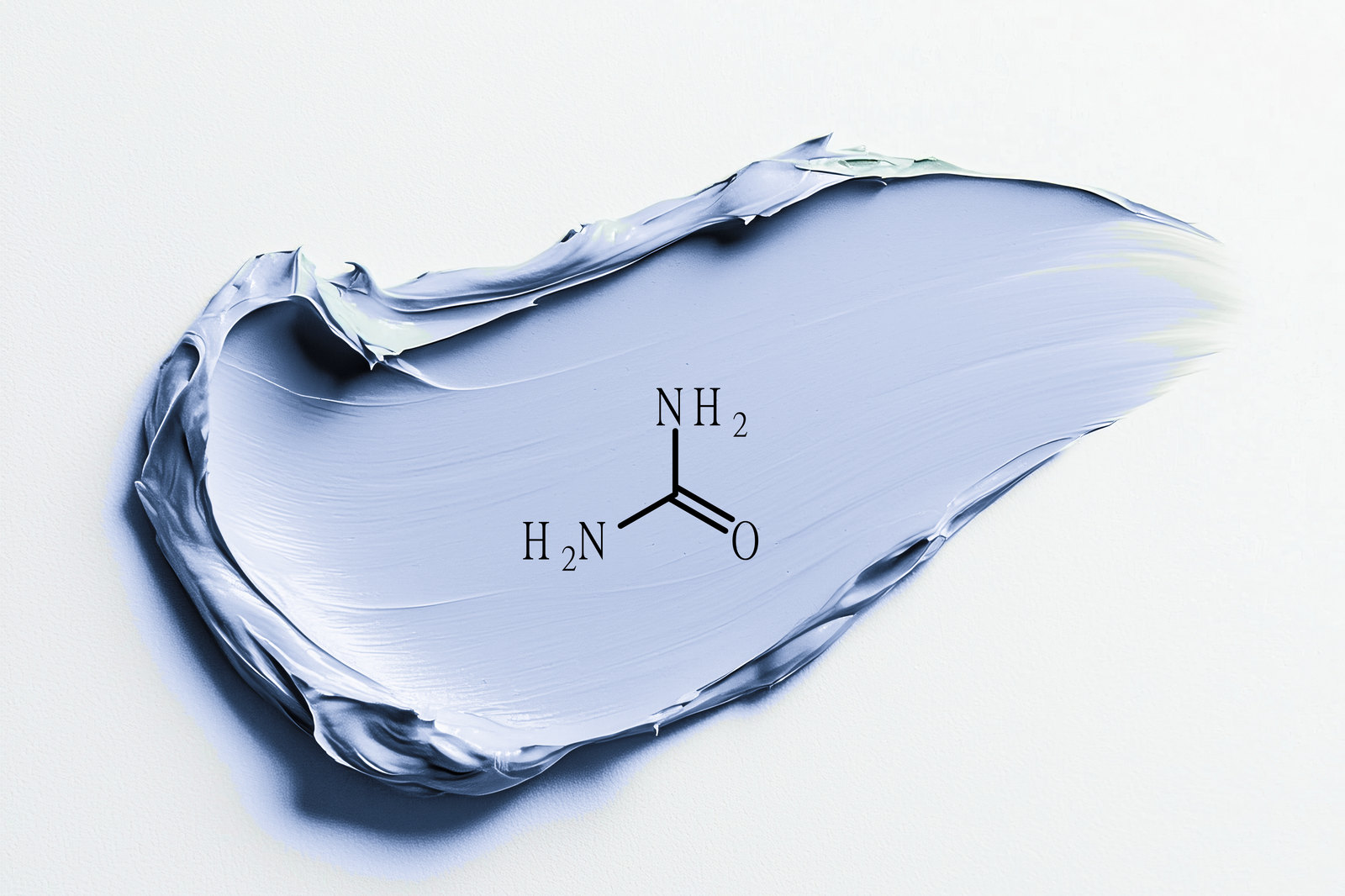
- Synonyms: carbamide, carbonyldiamide
- Origin: synthetic in cosmetics
- Country of Origin: Top producers are China and India, followed by Russia, countries with large natural gas reserves in the Middle East, and the USA.
- Category: natural moisturizing factor (NMF)
- Characteristics: white, crystalline, odorless
What are the Benefits of Urea in Skin Care?
Urea provides intense moisture by binding water in the stratum corneum, reducing transepidermal water loss (TEWL) and thus improving elasticity. At the same time, it smoothes dry, rough skin and reduces flaking.
At concentrations of around 10% or higher, urea can also have a mild to significant keratolytic effect (meaning it dissolves or loosens hardened skin).
Urea-based products containing 20-30% concentrations may help relieve itching, soften and break down keratin, the thin, outer skin layer, and improve dry, scaly skin in conditions such as ichthyosis.
Products in which urea is present at a concentration of 40% or higher are powerful enough to break down proteins, which means they can be used to peel or dissolve nails that have thickened or have become misshapen.
In most cases, urea is very well tolerated in low to medium concentrations (3-10%). It may cause a brief tingling or burning sensation, and on irritated skin, it may cause itching or stinging. High concentrations (> 20-40%) should be used intentionally and never on exposed skin.
The EWG score for urea is relatively low, depending on company data and use restrictions. It is considered a generally safe product that poses a low risk for common concerns such as cancer, allergies, and toxicity.
How Urea is Used in Cosmetic Products
Urea is often used in creams and lotions for both the face and the rest of the body, as well as in hand and foot care products, shower gels, and shampoos.
Applications include
- Dry to very dry skin, xerosis, age-related dryness;
- Flaky, rough areas (e.g., shins, elbows, heels);
- Keratosis pilaris;
- Dry or flaky scalp (moisture-balancing).
INFORMATION ABOUT
other ingredient
Ada Cosmetics Expert Stories

Cosmetic ingredients
Cosmetic ingredients are the active and inactive chemicals used to make cosmetics and other personal care products. Each ingredient plays one or more important roles in the end formulation, ranging …
Read more
Allergens in Cosmetics
Most cosmetics contain at least one or more ingredients classified as potential allergens. Both natural and synthetic chemical ingredients have the potential to cause an allergic reaction, and those …
Read moreFAQ about Urea
How is Urea Produced Industrially?
Urea is produced on an industrial scale using the Bosch-Meiser process, also known as the Haber-Bosch process. This process involves reacting ammonia with carbon dioxide at high temperatures and pressures. Ammonia is synthesized from nitrogen and hydrogen; the carbon dioxide comes from natural gas. This reaction produces ammonium carbamate, which then dehydrates to form urea.
How is Urea Used as a Fertilizer in Agriculture?
Urea has two major uses – cosmetics and agriculture, where it is widely used as a nitrogen-rich fertilizer. When applied to soil, it converts to ammonia and then to nitrate, which plants absorb for growth. It supports leaf development and boosts crop yields. Urea is cost-effective, easy to store, and suitable for various soil types and climates.
Can Urea be Toxic?
Yes, urea can be toxic in high concentrations. In humans and animals, excessive urea levels may indicate kidney dysfunction. In soil, overuse can harm microorganisms and plant roots. It may also release ammonia gas, which can irritate eyes and lungs. Proper handling and application are essential to prevent toxicity.