Hotel Management

How to Improve Hotel Reviews: A 2026 Playbook for UK Hoteliers

22 July 2026

Overview: What You Need to Know

  • 81% of travellers always or often read reviews before booking a hotel (TripAdvisor).
  • A one-point improvement on a five-star scale can justify an 11.2% price increase without losing occupancy (Cornell School of Hotel Administration).
  • Online reviews influence roughly £23 billion of UK consumer spending every year (CMA).
  • Since April 2025, fake reviews and undisclosed incentivised reviews are automatically illegal under the Digital Markets, Competition and Consumers Act 2024 (DMCC Act), with penalties of up to £300,000 or 10% of global turnover (CMA208 – Fake reviews guidance, April 2025; Nath Solicitors, Fake Reviews Are Now Illegal).
  • Cleanliness, staff behaviour, and sustainability are the three review themes most likely to move your score (TrustYou; Booking.com Sustainable Travel Report 2023).
  • The bathroom is the single biggest dealbreaker for cleanliness in UK hotel reviews. 95% of guests say they would not rebook a hotel with an unhygienic bathroom (Kaldewei).
  • Responding to every review (positive and negative) measurably improves your rating over time (Proserpio & Zervas, Marketing Science, 2017).
  • Small operational changes (such as sealed amenity dispensers, sub-score ownership, timed review requests) have an outsized effect on scores.

Why Hotel Reviews are Important in 2026

Hotel reviews are not just a vanity metric. They sit at the centre of four things that directly affect a hotel’s bottom line: platform visibility, room rate, consumer trust and corporate eligibility.

Platform visibility

Booking platforms such as Booking.com and TripAdvisor use review scores as a ranking signal. A higher score means your property appears further up the results page for a given location and date. In turn, this translates directly into more clicks and more bookings, regardless of how much you spend on advertising. 

Review recency also matters: both platforms weight recent reviews more heavily than older ones, so a run of strong recent scores can move your ranking faster than you might expect.

Room rate

The revenue impact of a better score is larger than most people realise. Research from the Cornell School of Hotel Administration found that a one-point improvement on a five-point scale allows a hotel to raise its room rate by 11.2% while maintaining the same occupancy (Cornell School of Hotel Administration). 

To put that in concrete terms: for a 50-room hotel averaging £120 per night at 70% occupancy, that single-point improvement is worth roughly £170,000 in additional annual revenue.

Consumer trust

81% of travellers always or often read reviews before booking accommodation (TripAdvisor), and the CMA estimates that around £23 billion of UK consumer spending each year is influenced by online reviews (CMA). Reviews have effectively replaced word of mouth at scale. Now, a guest who has never heard of your property will form their first impression from what strangers have written about it.

Corporate procurement

For hotels that rely on business travel, review scores increasingly appear in RFPs (Requests for Proposals). This is the formal process companies use to select preferred hotel suppliers. A procurement manager shortlisting properties for a corporate travel programme will often apply a minimum score threshold on Booking.com or TripAdvisor before a property even makes the longlist. A weak score can quietly exclude a hotel from this channel entirely.

What the DMCC Act Means for Hotel Reputation Management in the UK

Since 6 April 2025, the Digital Markets, Competition and Consumers Act 2024 has changed the legal landscape for online reviews. Certain practices that some hotels leaned on, for example, incentivising guests to leave positive reviews without disclosing it, are now automatically classed as unfair commercial practices by the CMA.

The CMA’s fake reviews guidance (CMA208, April 2025) and accompanying legal analysis (CMS Law, DMCC Act Consumer Elements) set out exactly what’s prohibited.

What’s now banned

Practice Why it’s caught
Submitting or commissioning fake reviews A review must be based on a genuine, first-hand experience, without any exceptions
Publishing incentivised reviews without clear disclosure Offering gifts, discounts, loyalty points, or complimentary stays in exchange for a review is fine only if the incentive is prominently disclosed
Manipulated presentation of reviews Selectively removing negative reviews on your own channels, giving disproportionate prominence to positive reviews, or skewing an aggregate rating are all prohibited

The penalties are significant. As Nath Solicitors set out in their analysis (Fake Reviews Are Now Illegal), businesses can face fines of up to £300,000 or 10% of global annual turnover, whichever is higher.

What this means in practice

You can still ask guests for reviews, and that’s entirely legitimate and encouraged. However, it’s good to know the rules:

  1. Ask after the stay, not before (timing matters)
  2. Don’t offer any reward in exchange for a review unless the incentive is clearly disclosed
  3. Don’t filter which guests you ask (only inviting guests you think will leave five stars is a form of manipulation)
  4. Keep records of your review request process in case of a CMA audit

What Guests Complain About: The Three Review Themes That Move Scores

Not all complaints are created equal. Sentiment analysis of hotel reviews consistently identifies three categories that have the greatest influence on a hotel’s overall score.

1. Cleanliness

Cleanliness is the most heavily weighted sub-score on major booking platforms, and the bathroom is where guests form their strongest judgement of cleanliness. Research shows that 95% of hotel guests would not rebook a hotel if they found the bathroom unhygienic (Journal of Business and Economics Research, Kaldewei).

2. Service and staff behaviour

How staff behave, particularly during the moments that matter most to a guest, is one of the strongest predictors of a positive review. TrustYou’s analysis of hotel ratings found that staff-related categories are among both the most positively and most negatively impacting factors across hotel reviews.

Personalisation (addressing a guest by name), anticipating recurring requests, and proactive check-ins during a stay all generate the kind of specific, quotable comments that appear in five-star reviews.

3. Sustainability

Sustainability is increasingly a driver of reviews, not just a booking consideration. Booking.com’s Sustainable Travel Report found that 65% of travellers say they would feel better staying in a sustainability-certified property, and 59% want to be able to filter their next stay by sustainability certification.

Guests who notice and value your sustainability credentials are also the guests most likely to mention them in a review, giving you a credible, specific positive that attracts future bookers.

How to Improve Hotel Reviews in 2026: 8 Practical Changes That Make a Real Difference

With guest expectations higher than ever in 2026, implementing these eight practical changes will help you elevate the daily guest experience and consistently secure those coveted five-star reviews.

1. Audit your guest rooms against your actual 1-star themes

Don’t rely on intuition. Pull your 1- and 2-star reviews from Booking.com, TripAdvisor and Google and look for the words that appear most often. Walk a sample of your rooms against those exact themes.

Dispenser-related issues (“empty”, “dirty”, “doesn’t work”) appear as a recurring complaint pattern in hospitality sentiment data. Switching to hygiene-safe, independently validated refillable dispenser systems eliminates an entire category of these complaints. ADA Cosmetics’ Smart Care system, for example, has been validated by Hochschule Rhein-Waal. Validated systems are also increasingly relevant for corporate RFPs, where procurement teams ask for evidence of hygiene standards. 

2. Tighten the housekeeping cycle around amenities and consumables

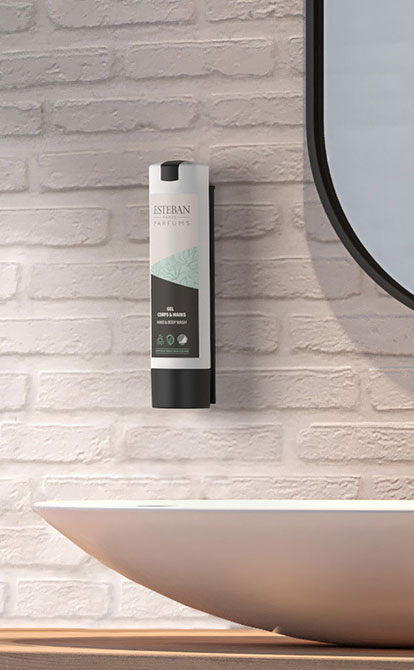
Loose mini-bottles are difficult to audit quickly. Wall-mounted, sealed cartridges with visible fill levels reduce restocking errors and make a low-fill check part of a housekeeper’s normal visual sweep of the room, rather than something that gets missed under time pressure.

3. Train front-line staff for the moments that generate review quotes

Five-star reviews almost always include a specific moment or a named member of staff. Three practices that reliably generate those quotes:

  • Addressing guests by name at check-in and during the stay
  • Anticipating recurring requests before they’re made 
  • A quick call during the stay to ask whether everything is comfortable and whether the guest needs anything

4. Ask for the review at the right moment

Post-checkout is the optimal window: within 24 to 48 hours of departure, when the experience is still fresh and the guest is back in their normal routine. Keep the process simple: a single-tap link and a short message. Do not use incentive language, and do not pre-filter who you contact. Keep an audit trail of your process (CMA208 — Fake reviews guidance, April 2025).

5. Respond to every review

Responding to reviews is one of the most consistently supported tactics in hospitality research.

6. Build sub-score discipline

Booking.com and TripAdvisor both publish sub-scores for cleanliness, comfort, location, facilities, staff, and value. These sub-scores are where improvement concentrates fastest, but only if each one has a named internal owner who is accountable for it.

Assign each sub-score to a specific department head and review performance against them quarterly.

7. Use review themes to brief operations

Quarterly reviews of recurring 1- to 3-star complaints should feed directly into operational briefings rather than sit in a spreadsheet. The format that works:

  1. Pull the most common negative themes from the past 90 days
  2. Assign each theme to an operational owner
  3. Set a measurable corrective action with a deadline
  4. Review whether it’s shifted the sub-score next quarter

8. Make the sustainability story visible in the room

With 65% of travellers saying they want to stay in sustainability-certified properties (Booking), a range of certified amenities gives guests something specific and credible to praise, but only if they can see it. Place the certification mark where guests will notice it. Certifications such as Cradle to Cradle Certified Silver or the Nordic Swan Ecolabel (a Scandinavian environmental certification now recognised across Europe) are verifiable and meaningful to guests who care about this.

How the Bathroom Quietly Moves Your Whole Hotel Review Score

The bathroom deserves its own section because it punches far above its weight in review data. It’s where guests form their strongest cleanliness judgement, and cleanliness is the sub-score with the greatest leverage on overall rating.

The most used comments in 1-star UK reviews

To pin down exactly what turns a bathroom into a bad review, we at ADA Cosmetics analysed three independent UK sources and grouped the recurring complaints into clear patterns:

  • A study of 329,849 UK TripAdvisor reviews (Rahimi, Thelwall et al., 2022, Semantic Scholar)
  • A sample of 1-star Booking.com and TripAdvisor reviews for UK chain hotels
  • A high-engagement Reddit thread on UK hotel bathrooms (1,540 upvotes, 429 comments)
Complaint pattern Common review terms Typical failure points
Mould and damp “mould”, “mouldy”, “damp”, “soggy” Silicone seals, grout, shower curtains, bathroom carpet
Visible dirt, hair and dust “dirty”, “filthy”, “stained”, “unclean”, “hygiene” Grout lines, behind fixtures, floor edges
Stale or unpleasant smells “smelt”, “smelly”, “stank”, “cigarette” Drain odour, residual damp, ventilation failure
Toilet and WC area “toilet”, “urine” Surfaces around the WC, empty toilet roll holders, and limescale
Shower hardware and wet-room design “leaked”, “soaked”, “controls”, “drain” Unsealed walk-in showers, hair-clogged drains, non-obvious controls
Empty or dirty dispensers “empty”, “sticky”, “congealed”, “fingerprints” Empty pumps, residue build-up, mini-bottles that look reused

The mould and damp cluster is the most overrepresented theme in 1-star UK hotel reviews. It’s worth noting that bathroom carpet, still common in UK budget and mid-market hotels, is a significant contributor.

Three operational shifts that reduce these complaints

The good news is that most of these recurring 1-star triggers come down to three fixable areas, and we at ADA Cosmetics see the same three shifts turn bathroom complaints into bathroom compliments across the hotels we supply.

1. Engineer the wet zone properly

Properly enclosed shower screens, hair-catching drains, anti-fog mirrors, and hard flooring (rather than carpet) close down an entire family of recurring 1-star complaints that housekeeping alone cannot fix. These are structural decisions, but they pay off in review-score terms over time.

2. Choose a certified amenity range that matches the room rate and sustainability promise

A guest paying £200 a night who finds low-quality, anonymous toiletries in the shower will mention it. A certified, premium-feel range that matches the property’s positioning gives guests something specific to praise and converts a recurring negative trigger into a quotable positive.

3. Move from mini-bottles to sealed, refillable dispenser systems

Sealed cartridges eliminate both the “empty bottle” complaint and the perception that toiletries might be contaminated or reused. Systems such as ADA Cosmetics’ hotel dispenser ranges, including Smart Care, SHAPE, and Press & Wash, are built around hygiene validation and visible fill levels, making restocking errors easier to catch. Choosing a validated system also removes the dispenser entirely from the contamination chain. 

Want to know which combination would work best for your property? Talk to us at ADA Cosmetics! Get in touch, and our team will help you turn your bathrooms into a reason guests rate you higher.

Frequently Asked Questions

How can a UK hotel legally encourage more reviews under the DMCC Act?

Under the DMCC Act 2024, UK hotels can ask guests to leave reviews, and this is entirely lawful. The key requirements are:

  1. Ask after the stay, not during or before.
  2. Do not offer any reward (discount, points, upgrade, gift) in exchange for a review unless the incentive is clearly and prominently disclosed in the review itself.
  3. Do not pre-filter who you contact. Asking only guests you believe will leave a positive review constitutes manipulation under the Act.
  4. Keep records of your review request process.

The CMA’s fake reviews guidance (CMA208, April 2025) is the primary reference document. The simplest compliant approach is a short post-checkout message with a single link, no incentive language, and no filtering based on predicted sentiment.

Does responding to reviews actually improve a hotel's rating?

Yes, the evidence is consistent. Research by Proserpio & Zervas (Marketing Science, 2017) found that hotels which respond to reviews see an average rating improvement of approximately 0.12 stars and receive around 12% more reviews overall. The mechanism appears to be twofold: management responses signal to potential guests that the property is professionally run and responsive, and they encourage future guests who know their feedback will be acknowledged.

Practical benchmarks:

  • Respond to positive reviews within around 3 days
  • Respond to negative reviews within 7 days (53% of guests expect this according to ReviewTrackers, 2022)
  • Keep responses specific rather than templated
  • Avoid defensive language when responding to criticism

How do bathroom amenities affect hotel reviews?

Bathroom amenities affect hotel reviews in two distinct ways: as a source of negative complaints and as a potential trigger for positive reviews.

On the negative side, dispenser-related issues (empty pumps, sticky residue, bottles that appear to have been refilled from loose containers) recur in 1-star UK hotel reviews and fall within the cleanliness sub-score, the single most influential sub-score on Booking.com and TripAdvisor. Research shows that 95% of hotel guests would not rebook a hotel with an unhygienic bathroom (Journal of Business and Economics Research, Kaldewei).

On the positive side, certified, premium-feel amenity ranges that match the property’s positioning and sustainability credentials give guests something specific and credible to mention in a review. With 65% of travellers saying they feel better at sustainability-certified properties (Booking.com, 2023), amenities that carry recognised certifications (Cradle to Cradle Certified Silver, Nordic Swan) are increasingly mentioned positively by guests who notice them.

In short: sealed, hygiene-validated dispensers, like those in ADA Cosmetics’ hotel amenities range, eliminate an entire category of recurring complaints while adding a credible sustainability story that guests can cite in reviews.

CONTACT
SHOP NOW

Buy ADA Cosmetics products in our online shop.

REQUEST AN OFFER

For product inquiries worldwide, please contact our sales partners.

CONTACT

For contact inquiries of all kinds, please use our contact form. We will get in touch with you as soon as possible.