Hotel & Travel Trends

How to Increase Direct Bookings for Hotels in 2025: 12 Strategies

17 October 2025

Increasing direct bookings for hotels has always been –  and remains – a key challenge and opportunity for the hospitality industry, not least because Online Travel Agencies (OTAs) have been a mixed bag for independent hoteliers:

On the one hand, OTAs have expanded the reach of the small hotel far beyond its pre-Internet presence, placing its rooms alongside those of the biggest names in hospitality. On the other hand, OTAs’ commission fees range between 15 and 25% of the room rate, resulting in significant profit loss. 

In this article, we will explore how hotels can increase direct bookings and reduce their dependence on OTAs. In most cases, hotels are contractually forbidden from undercutting an OTA’s price on their own, in-house website. Toward the end of this article, we will look at some effective strategies to work around these difficult-to-beat rate parity clauses.

What Is Direct Booking?

Direct booking refers to any reservation a guest makes with the hotel itself without using an intermediary or a third-party channel. This can be done through:

  • the hotel’s website,
  • the hotel’s phone line,
  • the hotel’s email or reservation desk.

Unlike hotel third-party bookings, direct reservations give the hotel full pricing control. It also allows for 

  • more flexible room/package merchandising, 
  • pre-arrival upsells, 
  • and data capture, including consent-based first-party data, preferences, and contact details. 

Data capture is a key source of information that hotels can use to personalize the customer experience in a scalable and operationally efficient way. Hotel direct booking also minimizes leakage in the customer journey. When guests research, choose, purchase, and share feedback within your ecosystem, you can measure – and improve – every touchpoint.

In 2025, “direct” does not yet mean “digital only,” but your website and engine will likely be your primary source. To increase your hotel direct bookings, it is crucial to deliver a frictionless and secure experience that rivals the big OTAs for speed, clarity, and trust signals.

Why Increasing Direct Bookings is Essential for Hotels

How to increase direct bookings for hotels starts with understanding the financial and strategic benefits of owning the booking channel. First, margin:

OTA commissions commonly cost 15-20% of the room rate, which compounds quickly at scale. The delta between a typical OTA take-rate and the fully loaded cost of a direct booking – including technology, media, payments, loyalty, and service – makes increasing the share of direct bookings the single greatest increase in per-booking profit available to most hotels. Industry tracking over two decades has shown average direct online distribution costs to be around 4.25 – 4.5%, a mere fraction of the double-digit OTA commission fees.

Second, demand is digital. Digital channels represent 60% of hotels’ global distribution revenue, and their share has been steadily increasing. Guests are already shopping and buying online; the commercial question is who will capture that spend – independent hoteliers or an intermediary OTA.

Finally, control. When the hotel owns the booking, the hotel owns the relationship. The rewards are significant: 

  • better data, 
  • richer pre-arrival personalization, 
  • stronger upsell and ancillary take-rates,
  • and higher lifetime value (LTV). 

That is why best-in-class revenue strategies treat OTAs as an important reach channel but use them purposefully to acquire new guests and convert them into repeat direct bookers.

What is a Third-Party Booking?

A third-party booking is a reservation transacted via an intermediary. From most to least common, these intermediaries are:

  • Online Travel Agencies (OTA) like Booking.com or Expedia; 
  • Metasearch engines, such as Google or Tripadvisor;
  • Bedbanks/wholesalers and tour operators; 
  • and corporate travel platforms via GDS. 

Third parties aggregate choice and spend aggressively on marketing, so they are powerful demand sources. They are particularly attractive to younger cohorts. Evidence shows 52% of millennials prefer booking hotels via OTAs, which reflects a bias in favor of brand familiarity, perceived price advantages, and convenience.

Disadvantages of Third-Party Bookings

When exploring how to increase direct bookings for hotels, it’s important to understand the drawbacks of relying too heavily on third-party channels.

  • Rate parity constraints.

Many contracts and marketplace rules enforce rate parity – the requirement to maintain the same public price for the same room across channels. This limits a hotel’s public pricing flexibility and influencing visibility in OTA sort algorithms.

  • Undercutting via commission games.

Some platforms temporarily reduce their commission to display a lower public rate, undercutting the hotel website’s price even when that hotel is honoring parity. Hotels have limited remedies because removing inventory from a major marketplace is costly.

  • Wholesaler leakage to “secondary” OTAs. 

Rooms contracted at a wholesale or packaged (B2B) rate can leak to smaller retail sites with minimal markups, undercutting the price available at the hotel’s own website and major OTAs. It’s a lose-lose situation that knocks the hotel out of parity even as it still pays the OTAs their usual commission fee. This leakage has been called a billion-dollar problem by distribution leaders and is a persistent source of price disparity and brand damage.

  • Gated-rate exposure. 

Consider this familiar (and frustrating) scenario:

“Hotels offer an exclusive ‘gated’ rate to a third-party reseller. That reseller turns around and unofficially resells rooms at that gated rate to a party who lists that rate publicly. This forces the hotel to pay a high commission for rooms that sell at a much lower rate, losing tons of profit in the process.”

Even when technically compliant, these dynamics erode consumer trust (“Why is an online travel site cheaper than the hotel itself?”) and inflate acquisition costs the hotel can’t control.

What Factors Influence Hotel Direct Bookings?

Understanding how to increase direct bookings for hotels starts with knowing the key factors that influence a guest’s decision to book directly.

  • Distinctive product & brand cues. 

Guests choose to book directly with a hotel when they perceive a tangible advantage to doing so. What better way to start than with a memorable, sensorial brand experience, e.g., signature amenities that set the hotel apart?

ADA Cosmetics is a global leader in hotel cosmetics, providing hoteliers with not only high-quality bathroom amenities but also solutions in this sector’s latest trends. With ADA Atelier, ADA Cosmetics is proud to offer hoteliers a path to crafting their very own signature scent, a type of scent marketing previously reserved for the biggest names in hospitality. Let ADA Cosmetics help give your hotel the kind of recognizable, trusted identity that leads guests to search for your name next time – not an OTA’s.
  • Website UX and booking engine quality. 

Navigation must be: 

  • effortless; 
  • rates, policies, and inclusions should be transparent; 
  • checkout must be fast, mobile-first, and secure. 

If your booking experience doesn’t feel as seamless, legitimate, and safe as an OTA’s, then you will lose on trust and speed – no matter your price.

  • Visibility (findability) of your site. 

You win the direct booking by showing up. Local SEO, Google Business Profile, organic content, and reputation (ratings and review velocity) drive qualified, high-intent traffic. Partnering with an experienced SEO agency can help hotels optimize these elements, improve search visibility, and capture more direct bookings from high-intent travelers.

  • Real-time availability & price confidence. 

Guests want immediate, accurate inventory. Recent data shows travelers are booking further in advance and making fewer last-minute reservations as shoppers try to secure better prices earlier. In Europe, long-lead (>30 days) bookings rose from 52% to 63% of revenue in 2023 while last-minute (0–7 days) fell from 22% to 15% vs. 2019. 

That pattern rewards hotels that make room availability instantly visible on their websites.

  • Channel-mix dynamics by market and segment. 

During the pandemic, Europe saw direct bookings surge to about one-third of online revenue (e.g., 34.2% in 2020) before normalizing. Today, some 28% of European hotels’ online revenue comes via the direct channel. 

Notably, hotel positioning matters: in Europe, 5-star hotels generated 38% of online revenue via direct bookings, versus 19% at 2-star hotels, a spread that likely proxies for brand awareness and loyalty depth. 

The lesson is clear: if hotels want more direct bookings, they must build up their brand.

Top 12 Strategies to Increase Direct Bookings for Hotels

Boosting brand awareness is the best way to increase hotel direct bookings. OTAs win because they’re top-of-mind. Every tactic below strengthens your brand salience so that your name – not Booking.com or Expedia – is what pops into a traveler’s head (and search bar) when it’s time to book.

1) SEO that captures intent (not just keywords)

Own the high-intent queries that matter: 

  • “[hotel name],” 
  • “[hotel name] reviews,” 
  • “[hotel name] phone,” 
  • “best [neighborhood] hotel,” and 
  • “hotels near [POI] with parking/pool/spa.” 

Go beyond pictures. What other valuable content can your website offer potential guests? Here are some ideas to get you started:

  • Build topical clusters, e.g., weddings, meetings, family stays, 
  • structured data (schema), 
  • lightning-fast Core Web Vitals, 
  • and localized content

The point here is to offer valuable content that answers real questions and queries by potential guests better than a generic OTA ever could. You’re local. You can leverage the specific knowledge that you have as a local to offer value an OTA simply does not have the base to match. Additionally, this ensures that your branded and non-brand organic share grows while metasearch and OTA arbitrage on your brand term becomes less effective.

“Don’t forget about Google Reviews – make sure you use guest quotes and feature them on the website. Also, ensure the star ratings are clearly visible.”

– Artem Zahrebelnyi, SEO Manager

2) Website & booking engine optimization

Treat your booking engine like a modern checkout. It should:

  • Be one page with minimal required fields.
  • Support wallet payments (e.g., Apple Pay, Google Pay).
  • Offer save-and-resume functionality.
  • Display clear progress indicators during checkout.
  • Show best-rate guarantees and trust badges (PCI-compliant payments, security seals).
  • Provide concise policy summaries.

Additional best practices:

  • Run A/B testing on room cards, photos, CTAs, and rate framing (e.g., member price vs. public BAR, refundable vs. prepaid).
  • Eliminate UI friction points that OTAs have already solved on their sites.

3) Google Business Profile (GBP) excellence

GBP is often the first brand touchpoint – own it by keeping your profile pristine: 

  • Uploading fresh, high-quality photos;
  • Listing accurate amenities;
  • Writing rich, detailed descriptions;
  • Adding structured attributes (e.g., pet-friendly, parking, Wi-Fi);
  • Responding promptly to Q&A and reviews.

Additional tips:

  • Feed price and availability via your booking engine/metasearch connectivity.
  • Participate in free booking links to capture high-intent traffic at the discovery stage.

4) Tripadvisor profile that sells

Curate your primary listing with 

  • up-to-date hero images, 
  • category-specific galleries (rooms, dining, spa), 
  • amenity highlights, 
  • and owner responses that demonstrate service culture. 

Encourage recent guests to review (ethically and within platform guidelines) to keep your listing current and credible. Prominent rankings and recent reviews improve click-throughs to your site.

5) Post-stay engagement that turns OTA customers into direct bookers

Run a consented first-party data program. Send a thank-you, request feedback, and invite guests to book directly next time with a loyalty/member rate (more below). Segment by channel of acquisition and travel purpose to tailor offers and content cadence. The goal is to migrate OTA bookers into your owned Customer Relationship Management (CRM).

6) Loyalty pricing that re-allocates commission to the guest

Offer OTA-acquired guests the same rate they paid last time, minus the OTA commission, when booking directly on their next stay. For example, if OTAs charge 15–25% in commission, you can pass on most of that to the guest as a member discount and still improve your contribution margin. This is ethical, transparent, and customer-centric: hand 10–20% to your guests, not the OTA, and win their loyalty.

7) Parity-compliant value-adds for direct bookers

Use non-price perks that do not alter the public room rate to create meaningful “effective savings” to direct bookings: 

  • complimentary parking, 
  • early check-in/late check-out, 
  • welcome amenities, [HYPERLINK TOP HOTEL AMENITIES ARTICLE HERE]
  • drink vouchers,
  • spa/restaurant credits. 

Because OTAs and metasearch compare the room price, these value-adds can differentiate your offer without breaching parity. Communicate them prominently on rate cards and throughout the booking flow.

8) Brand-building amenities & scent marketing

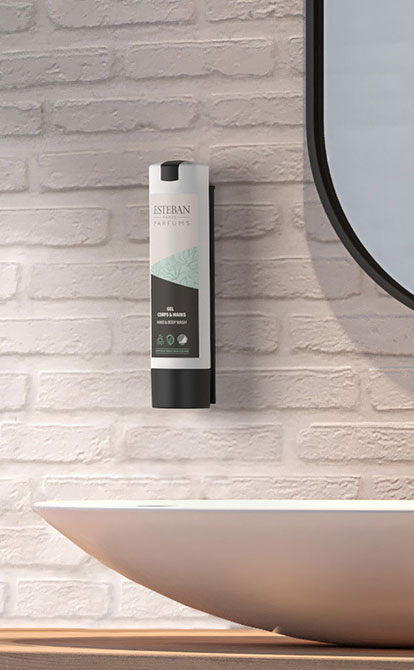
Invest in distinctive, high-quality cosmetics and in-room care that speak your brand. ADA Cosmetics’ portfolio and housekeeping-friendly Refillution systems communicate class, quality, and sustainability. A subtle signature scent in public spaces leaves a lasting impression of your hotel. These sensorial anchors increase guest affinity and brand recall, which convert later into brand-name searches and direct bookings.

9) Metasearch & free booking links as a direct bridge

Participate in Google Hotel Ads, Tripadvisor, and other metas with your own booking link so shoppers can click into your engine. Use smart bidding to protect brand terms and key city-stay dates. Monitor ROAS holistically (including view-through and assisted conversions) and include payment options that match OTA convenience.

10) Review velocity and reputation management

OTAs often win clicks on social proof. Systematically grow recent, high-quality reviews on Google and Tripadvisor. Respond to all reviews with empathy and specificity. Strong recent ratings lift both SEO and conversion.

11) Distribution hygiene to protect your price

Tighten contracts and monitoring. Require closed-user-group rates to remain gated, audit them frequently, and terminate partners who leak. Use rate-parity tools to identify wholesaler leakage and secondary OTA undercutting. If an OTA manipulates the commission to show a lower rate, escalate quickly and renegotiate terms. Distribution hygiene protects your best-rate guarantee and your brand.

12) On-property conversion programs

Train your front desk and reservations team on how to convert in-house and repeat guests to direct bookers. Capture e-mail consent, enroll guests in member rates, and above all, explain the tangible benefits of direct booking, such as value-adds, flexibility, and loyalty rewards. Equip agents with save-the-sale offers – for example, by matching a verified OTA price and including a direct-only perk – to keep the relationship inside your walls.

Bringing It Together: A 2025 Direct-Booking Playbook

  1. Audit & benchmark. Map your channel mix and economics. Quantify true acquisition costs (by channel, by market). Identify parity issues, wholesaler exposure, and top OTA sort-order risks.
  2. Fix the foundation. Elevate site speed, content quality, booking-engine UX, payments, and trust signals to OTA-level ease.
  3. Make direct offers obvious. Prominent member prices, parity-compliant perks, and clear, honest policy language.
  4. Turn OTAs into a feeder. Post-stay journeys with OTA-to-direct migration offers, backed by a strong service recovery and on-property enrollment program.
  5. Defend rate integrity. Monitor, enforce, and rationalize your partner list; cut chronic leakers.
  6. Build brand memories. Distinctive amenities such as ADA Cosmetics SmartCare and Actimood signature scents are the kind of service rituals that make your hotel the name guests remember.

Direct bookings are not won with a single tactic. They’re the cumulative result of brand equity, digital excellence, and distribution discipline applied consistently.

FAQ

What is an example of a direct booking?

A direct booking is when a guest reserves a room through the hotel’s own channels, such as its website, phone line, or front desk.

What is the most popular distribution channel in hotels?

Online Travel Agencies (OTAs) like Booking.com and Expedia are among the most popular hotel distribution channels.

What is the difference between direct booking and indirect booking?

A direct booking is made through the hotel’s own channels, while an indirect booking comes via third parties like OTAs, travel agents, or wholesalers.

CONTACT
REQUEST AN OFFER

For product inquiries worldwide, please contact our sales partners.

CONTACT

For contact inquiries of all kinds, please use our contact form. We will get in touch with you as soon as possible.