Hotel & Travel Trends

Hotel Efficiency: A Practical Guide to Doing More With Less

18 December 2025

What if the key to running a more profitable hotel isn’t having more hands, just more efficient ones? In a world where expenses are rising[1] and guest expectations are high, hotel efficiency isn’t a luxury—it’s a necessity.

From streamlining housekeeping to leveraging the power of hotel analytics software systems, independent hoteliers can thrive by doing more with less.[2]

This practical guide explores the metrics, mindsets, and methods behind leaner, sharper operations. Whether you’re managing a boutique inn or a small chain, improving hotel efficiency can boost your margins and elevate the guest experience—all without breaking the bank or burning out your staff.

What is Hotel Efficiency?

Hotel efficiency is an operational objective: to maximize revenue and guest satisfaction while minimizing costs and waste.[3] In everyday parlance, it means doing more (bookings, occupancy, service) with less (labor, supplies, energy).

Profit margins are the primary metric hoteliers use to gauge their hotel’s efficiency. Typically, analysts express hotel profit margins as a percent of revenue when indicating operational efficiency.[4] This means that when expenses grow faster than revenues, efficiency slips.[5]

Similarly, streamlining hotel housekeeping—for example, through standardized room setups and smart cleaning schedules—directly improves housekeeping efficiency and total efficiency.

Why is Hotel Efficiency Important?

In today’s market, efficiency is vital for independent and small hotels. Rising operating costs and guest expectations are squeezing margins.[6]

For example, increasing labor costs are a major issue. Studies show that about 70% of hotels struggled to fully staff their housekeeping teams in 2025. With fewer hands on deck, cleaning and room-turn tasks slow down, hurting hotel efficiency. At the same time, costs keep climbing: In major markets, wages and utility expenses jumped roughly 15–20% in the last two years.

These pressures mean every dollar saved matters. Industry data show that hotel expenses grew about 4.1% in 2024, outpacing revenue growth—which was 2.3% that year—indicating an inefficiency that directly eroded profit.

Guest demands are also putting downward pressure on profit margins. Today’s travelers expect spotless rooms and fast service—a level of speed and quality hard to achieve with slow, outdated processes.[7]

In this era of online reviews and social media, efficiency in service drives bookings. Research shows that 79% of travelers are more likely to book the hotel with higher online ratings,[8] which means that poor efficiency—e.g. slow check-ins or messy rooms—can cost you guests.

Occupancy is also in flux. As of September 2025, U.S. hotel occupancy stood at just 63.4%,[9] meaning that any additional empty beds due to inefficiency is a further cut in revenue that the average hotel cannot afford.

Hotel efficiency safeguards profitability: It lets small hotels do more business with leaner teams, improving margins and guest satisfaction simultaneously.

How to Measure Hotel Efficiency?

Tracking efficiency starts with key performance metrics. Below are the main ones for independent hoteliers to watch:

  • Occupancy Rate is the percent of rooms sold out of total rooms over a given time period. High occupancy means a more efficient use of space and higher total revenue, which is usually offset by room rate. A rising occupancy rate is usually a sign that a hotel’s sales and pricing efforts are effective—a clear win for hotel efficiency.
  • Average Daily Rate (ADR) is the average room revenue per occupied room.[10] It shows how well a hotel is pricing its rooms. If occupancy is high but the ADR is too low, the hotel may fill beds but earn little on each. Conversely, a high ADR with low occupancy might mean overpriced rooms. The U.S. ADR was about $162.69 in Sept 2025. Tracking ADR helps gauge pricing efficiency: A higher ADR (when demand supports it) generally means better revenue per stay.
  • Revenue per Available Room (RevPAR) combines occupancy and ADR into one measure of revenue efficiency.[11] RevPAR is calculated as ADR × Occupancy,[12] and calculates how much revenue a hotel earns on average out of all of its rooms. A rising RevPAR shows that a hotel is converting its inventory to revenue effectively. In Sept 2025, U.S. RevPAR was $103.19.
  • Cost per Occupied Room (CPOR) is the total operating cost (labor, utilities, supplies, etc.) divided by the number of occupied rooms.[13] CPOR indicates how much it costs the hotel each time it rents out a room. Lower CPOR means better cost control per guest served—a key indicator of hotel efficiency. Housekeeping CPOR is a subset of this metric, which measures only the average cost to clean each occupied room.[14] Managing CPOR well involves trimming unnecessary spending: for instance, efficient cleaning schedules and bulk purchasing can reduce CPOR.
  • Gross Operating Profit per Available Room (GOPPAR) measures the true profit per room.[15] It is calculated as GOP (total revenue minus operating expenses) divided by total rooms and shows whether a hotel’s operations are truly efficient after all costs. A high GOPPAR indicates that the business is generating strong profits per room; whereas if GOPPAR is flat or falling, it’s a red flag to improve efficiency (cut costs or raise rates).
  • Guest Satisfaction Metrics include ratings such as Net Promoter Score (NPS) and online review scores. They don’t measure dollars directly but rather gauge the efficiency of service delivery. Typically, hotels with excellent guest satisfaction command higher occupancy and rates. For example, 79% of guests prefer to book the hotel with better online ratings. Thus, even though harder to quantify, high satisfaction is integral to hotel efficiency over the long run.

Factors That Lead to Low Efficiency in Hotels

Several pitfalls can sap a hotel’s efficiency. Common culprits include:

  • Staff Shortages: When critical positions (like housekeeping or front desk) are understaffed, the remaining team must work extra shifts or rush tasks. This not only degrades service (and thus future bookings) but also inflates labor costs (e.g. via overtime or temp help). Industry reports find about 70% of hotels had trouble staffing housekeeping in 2025. Such shortages directly slow down operations and erode hotel efficiency.
  • Poor Management and Planning: Inefficient scheduling, chaotic workflows and the crisis management they both inevitably necessitate waste time and money.[16] Not forecasting demand properly, for example, can lead to chronic overstaffing in slow periods or frantic understaffing during busy times. Over- or under-forecasting both hurt efficiency: Too much staff means idle payroll; too little means unsatisfied guests (who may take their business elsewhere).
  • Insufficient Training: Inexperienced or untrained employees work more slowly and make more mistakes. Housekeeping in hotel settings, to cite just one example, requires training[17] in consistent room setups and rapid cleaning methods. Without it, attendants might duplicate work or deliver uneven quality, wasting hours of costly labor. Likewise, untrained front-desk staff may take longer to check in guests or fail to upsell rooms, aggravating customers and depressing revenue.
  • Demand Fluctuations: Extreme seasonality or unpredictable events (local conventions, weather) can cause feast-or-famine occupancy patterns. In feast periods, operations may bottleneck; in famine periods, fixed costs loom larger per room. Managing these swings requires nimble staffing and pricing—otherwise efficiency plummets in either scenario.[18]
  • High Operating Costs: If costs keep rising unchecked, efficiency suffers. For example, in 2024 U.S. hotel operating expenses grew about 4.1% while revenue grew by only 2.3%. In effect, each occupied room was delivering less profit than it had the year before. When costs (wages, energy, supplies) outpace revenue, the hotel is less efficient and profitable.
  • Lack of Technology: Staying on pen-and-paper or outdated systems is a classic efficiency bottleneck. Manual processes (for reservations, accounting, or room assignment) take longer and incur more errors. For instance, without a modern Property Management System (PMS) or housekeeping app,[19] staff may waste time on repetitive tasks that software could handle instantly.[20] This gap keeps costs high and service slow, reducing overall hotel efficiency.

How to Maximize Hotel Efficiency?

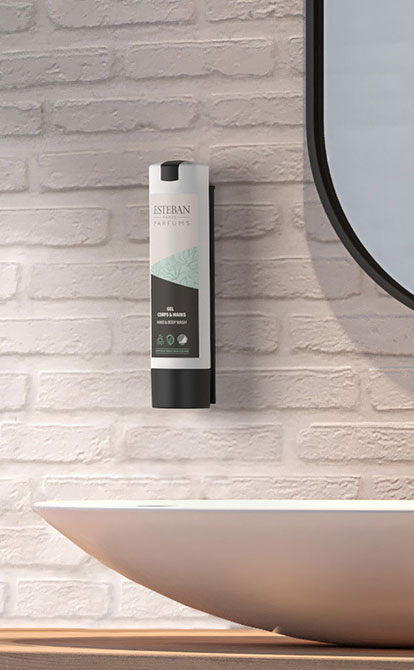
  • Optimize Housekeeping Operations: Streamline housekeeping workflows by standardizing room setups, using efficient cleaning checklists, and organizing supply closets. For example, implementing ADA Cosmetics’ Refillution system for ultra-hygienic and industry-leading unit refill times cuts housekeeping time and waste dramatically.[21] ADA Cosmetics’ patented rapid-refill dispensers shave precious time off of housekeepers’ long to-do lists and cut plastic usage by some 95%. Standardizing room layouts and creating efficient cleaning checklists also boosts housekeeping efficiency. When attendants spend less time retrieving supplies or double-checking supplies, they turn rooms faster and at lower labor cost—directly raising overall hotel efficiency.
  • Elevate Guest Service Experience: Well-trained staff can do more with less by being efficient and solving problems proactively. Invest in customer-service training and multi-skilling. A courteous front-desk agent who multitasks (checks guests in quickly while managing calls) greatly speeds up operations. Since 79% of travelers book higher-rated hotels, a polished service pays off in repeat business. Implementing a modern hotel reservation management system, such as a cloud-based PMS with an easy booking interface, also improves efficiency: Errors fall, and staff can handle more bookings without extra effort. Empower employees with simple tech tools (mobile PMS apps, digital room-service platforms) so they do not become bogged down by paperwork. Happy, well-equipped employees improve the guest service experience and can serve guests more efficiently, boosting both loyalty and revenue.
  • Invest in Technology and Data: Use software to automate routine tasks. A contemporary PMS that syncs with online channels means 24/7 booking updates without re-keying. Similarly, a dynamic hotel rate management (revenue management) system uses historical data and market trends to adjust pricing in real time and match supply with demand.[22] This automation maximizes ADR and RevPAR automatically, without manual spreadsheets. Data analytics tools can help managers forecast slow periods – and then take strategic, proactive steps to compensate for them, for example, by launching promotional pricing.

Even small changes add up: One consulting case study reported that after a digital overhaul, a boutique hotel chain cut operational costs by 15% and lifted guest satisfaction by 20%.

Conclusion

Aligning efficient processes (like tech and training) with a focus on guests can markedly improve both the bottom line and the guest experience. By continually measuring the metrics above and refining processes – from hotel housekeeping to check-in to pricing – independent hoteliers can truly do more with less, staying profitable in any market.

[1] Source: https://www.cbre.com/insights/articles/all-eyes-on-operating-costs-in-2025-lessons-learned-in-2024#:~:text=Hotel%20profit%20margins%2C%20which%20measure,a%20few%20years%20beyond%20that

[2] Source: https://www.mews.com/en/blog/hotel-efficiency

[3] Source: https://www.mews.com/en/blog/hotel-efficiency#:~:text=The%20trick%20is%20to,like%20cost%20and%20time

[4] Source: https://www.cbre.com/insights/articles/all-eyes-on-operating-costs-in-2025-lessons-learned-in-2024#:~:text=Hotel%20profit%20margins%2C%20which%20measure,a%20few%20years%20beyond%20that

[5] Source: https://www.cbre.com/insights/articles/all-eyes-on-operating-costs-in-2025-lessons-learned-in-2024#:~:text=Hotel%20profit%20margins%2C%20which%20measure,a%20few%20years%20beyond%20that

[6] Source: https://www.cbre.com/insights/articles/all-eyes-on-operating-costs-in-2025-lessons-learned-in-2024#:~:text=Hotel%20profit%20margins%2C%20which%20measure,a%20few%20years%20beyond%20that

[7] Source: https://www.prostay.com/blog/housekeeping-technology/#:~:text=The%20pandemic%20changed%20everything%20about,methods%20is%20tough%20and%20costly

[8] Source: https://www.guestara.com/post/hotel-reviews-how-to-respond-to-bad-reviews-and-prevent-them-from-happening#:~:text=Let%20me%20be%20blunt%20about,hotel%20with%20a%20higher%20rating

[9] Source: https://www.hospitalitynet.org/news/4126420.html#:~:text=1

[10] Source: https://www.hospitalitynet.org/news/4126420.html#:~:text=Another%20fundamental%20metric%2C%20ADR%20represents,room%20over%20a%20given%20period

[11] Source: https://www.hospitalitynet.org/news/4126420.html#:~:text=There%20are%20two%20key%20formulae,used%20to%20calculate%20RevPAR

[12] Source: https://www.investopedia.com/terms/r/revpar.asp

[13] Source: https://www.siteminder.com/r/cpor/#:~:text=CPOR%20is%20a%20crucial%20metric,have%20guests%20staying%20in%20them

[14] Source: https://www.siteminder.com/r/cpor/#:~:text=What%20is%20cost%20per%20occupied,room%20in%20housekeeping

[15] Source: https://www.siteminder.com/r/goppar/#:~:text=GOPPAR%20means%20gross%20operating%20profit,picture%20of%20overall%20business%20health

[16] Source: https://www.netsuite.com/portal/resource/articles/erp/improve-hotel-operations.shtml

[17] Source: https://www.prostay.com/blog/housekeeping-technology/

[18] Source: https://www.bu.edu/bhr/2021/06/29/efficiency-the-next-frontier-of-hotel-revenue-management/

[19] Source: https://www.prostay.com/blog/housekeeping-technology/

[20] Source: https://www.mews.com/en/blog/hotel-efficiency

[21] Source: https://www.hotelmanagement.net/sponsored/innovative-amenity-refill-system-elevates-hotel-sustainability-efforts-efficiency-cost#:~:text=Elevating%20Housekeeping%20Efficiency

[22] Source: https://www.hospitalitynet.org/news/4126420.html#:~:text=,competitor%20pricing%20and%20booking%20trends

[23] Source: https://www.ihg.com/candlewood/hotels/us/en/reservation

FAQ

What is the difference between efficiency and effectiveness?

Efficiency is doing tasks with minimal waste; effectiveness is achieving the desired outcome. Hotel efficiency focuses on speed and cost, effectiveness on results.

What is an efficient hotel room?

Also called a studio or one-bedroom suite, an efficiency hotel room is typically a compact unit with a small kitchenette [23]. By giving guests self-service options (like cooking their own breakfast), such rooms can cut down on room-service demands and housekeeping tasks. This design approach can boost overall hotel efficiency by saving staff time and reducing food and beverage costs. 

What is the role of housekeeping in hotel efficiency?

Housekeeping in hotel operations directly impacts efficiency through room turnaround speed, supply usage, and cleanliness standards that affect both guest satisfaction and operational expenses.

CONTACT
REQUEST AN OFFER

For product inquiries worldwide, please contact our sales partners.

CONTACT

For contact inquiries of all kinds, please use our contact form. We will get in touch with you as soon as possible.