Sustainability
Hotel & Travel Trends

Sustainability in Hospitality: Challenges & Strategies

17 June 2026

 Sustainability in Hospitality: Overview

  • Net Zero 2040 Target: The UK Hospitality Net Zero Roadmap commits the UK sector to reaching carbon neutrality by 2040, a full decade ahead of the national 2050 legal requirement.
  • Energy Cost Pressures: UK hospitality businesses spend over £1.3 billion annually on energy, according to the British Business Bank. Installing efficient equipment is now the fastest way to lower daily running costs.
  • Food Waste Financial Loss: Commercial kitchens typically lose between 5% and 15% of the food they buy to waste. For the UK hospitality sector, this results in a collective loss of £3.2 billion every year, according to Winnow’s 2024 Waste Index.
  • Consumer Demand Shift: Recent data from Expedia Group indicate that 90% of travellers now actively seek sustainable options when booking accommodation and experiences.
  • Plastic Waste Volume: According to Statista’s EU plastic waste analysis, the average European citizen produces roughly 31kg of plastic packaging waste every year. In the UK, this figure is higher at approximately 35kg. In the hospitality sector, this translates into a massive volume of single-use items, especially in guest bathrooms, where miniatures are standard.
  • Emission Hotspots: 60-90% of a hotel’s carbon footprint comes from Scope 3 emissions, which are indirect emissions from the production and delivery of the products it buys. According to the Hospitality Sector Council, focusing on these supply chain emissions is the most effective way to lower a business’s total environmental impact.

What Is Sustainability in Hospitality?

Sustainability in the hospitality industry means running a hotel or restaurant in a way that protects the environment and supports local people. It is also known as green hospitality or eco-friendly hospitality. 

The Triple Bottom Line

Experts use a simple plan called the Triple Bottom Line (also known as the 3 Ps) to measure success. This framework looks at more than just money by balancing three key areas:

  • People (Social): Treating staff fairly and helping the local community.
  • Planet (Environmental): Saving water and energy while cutting down on waste.
  • Profit (Economic): Staying financially healthy through long-term efficiency.

Focusing on the 3 Ps helps a hotel run its business better while protecting the natural beauty that attracts guests to the area. Physical steps, such as switching to refillable soap dispensers or using energy-saving lights, help a hotel meet these goals by cutting costs and reducing its impact on the earth.

Linear vs. Circular Economy

Sustainable operations focus on managing resources like water and energy more effectively while eliminating plastic waste at the source. Modern hotels are transitioning from a linear economy to a circular economy to ensure every product has a responsible lifecycle.

  • Linear Economy (Take-Make-Waste): A “straight-line” model where items are used once and then thrown away.
  • Circular Economy (Make-Use-Return): A “loop” model where products are designed to be refilled, repaired, or recycled.

Adopting this continuous loop reduces environmental impact and cuts the costs of constantly buying single-use supplies. The University of Cambridge offers a clear guide on the Circular Economy for businesses looking to move away from traditional waste-heavy models.

Continually Adapting

Rather than being a static goal, sustainability is a continuous process of improvement. Businesses must adapt to new technologies and scientific findings to protect the very destinations they rely on for tourism. Research from the Sustainable Hospitality Alliance highlights that this journey is essential for the industry to reach a “net positive” impact on the world.

Why Is Sustainability Important in UK Hospitality?

Embracing sustainability in the UK hospitality sector offers an attractive opportunity for businesses to lead the way, meeting the growing demand from eco-conscious travellers while meeting national environmental targets. Focusing on green innovation allows hotels to stay ahead of the curve and build a brand that guests truly value and trust.

UK Regulation: The Net Zero Roadmap

The UK hospitality sector has set an ambitious pace for decarbonisation. The sector’s roadmap sets a goal of reaching Net Zero by 2040, a full decade ahead of the UK Government’s legal requirement of 2050.

For hotel owners, this means the window for voluntary change is closing. These standards will soon become mandatory components of building codes and corporate reporting.

Guest Expectations

Modern travellers are increasingly discerning and are moving beyond simple “eco-interest” toward active accountability. Research from the Expedia Group Media Solutions 2023 Sustainability Study indicates that 90% of consumers seek sustainable options when travelling.

Furthermore, the Skift Research 2023 State of Travel report indicates that a growing segment of “conscious travellers” now scrutinise a hotel’s environmental impact before booking. Guests no longer see eco-friendly practices as a “bonus.” They look for visible proof of commitment, such as:

  • An absence of single-use plastics in guest rooms and dining areas.
  • Clear communication regarding recycling and waste management systems.
  • The integration of local and seasonal produce on dining menus to reduce food miles.

Compliance and Financial Advantage

Adopting green practices early helps avoid risks associated with future environmental taxes or plastic bans. The 2023 ban on single-use plastics in England is a prime example of a policy shift.

Beyond avoiding fines, eco-friendly cost savings are substantial. High-efficiency lighting and smart HVAC (Heating, Ventilation, and Air Conditioning) systems directly reduce monthly utility bills, while sustainable hotels often enjoy higher occupancy rates due to an enhanced brand reputation.

What Are Key Sustainability Challenges in the Hospitality Industry?

While transitioning to greener operations offers long-term benefits, many businesses in the hospitality industry face significant sustainability challenges that can hinder their progress.

High Upfront Investment vs. Long-Term Savings

Upgrading legacy buildings (older properties built before modern energy-efficiency standards) requires significant capital investment. These buildings often have structural limitations, such as thin walls or single-glazed windows, that allow heat to escape.

  • Why new technology is less effective: If a hotel installs an efficient air-source heat pump but the building lacks proper insulation, the generated heat quickly dissipates through the walls. This results in a sophisticated system that fails to maintain room temperature efficiently, making the initial investment feel unproductive.
  • The Financial Barrier: According to the PwC UK Hotels Forecast, persistent cost pressures, such as high energy prices and rising labour costs, make it difficult for independent hotels in cities like Edinburgh or Dublin to afford these expensive energy-saving renovations.
  • Delayed Returns: Solar panels may take up to 10 years to pay for themselves through utility savings. Many smaller, family-run businesses cannot wait a decade for a return on investment while managing immediate operational costs.

The Data Gap

Effective management requires precise measurement, yet many hotel owners lack the specific data needed to identify exactly where resources are being wasted.

  • The “Invisible” Footprint: While a manager can easily track electricity bills, they often lack visibility into the emissions generated by their suppliers. For instance, the carbon produced by a factory that manufactures the hotel’s linens remains part of that hotel’s environmental impact.
  • The Scale of the Problem: According to the Sustainable Hospitality Alliance, 8 out of 10 hotels struggle to report their full carbon footprint because they don’t have data from their suppliers. Without professional tracking tools, a business is merely guessing at its true environmental performance.

Supply Chain Complexity

A hotel operates as a complex network involving hundreds of different vendors, from local food producers to global amenity manufacturers. Ensuring every partner adheres to high ethical standards is a significant administrative task.

  • The Power Imbalance: A small 10-room boutique hotel in the Cotswolds may request that food be delivered in reusable crates, but a large national supplier may refuse to alter its logistics for a single small account.
  • The Oversight Challenge: A large resort may manage over 500 different suppliers. Verifying that every single vendor pays fair wages and utilises renewable energy requires a dedicated team of experts, which many hotels do not possess.

Greenwashing Risk

In an effort to appeal to eco-conscious guests, some businesses make environmental claims that are exaggerated or lack evidence. This practice is known as Greenwashing.

  • The “Distraction” Strategy: A hotel might heavily market the removal of plastic straws as a major environmental win, while continuing to use an inefficient, oil-fired boiler for its heating system. This creates a misleading impression of the hotel’s overall impact.
  • Legal Scrutiny: In the UK, the Competition and Markets Authority (CMA) actively monitors businesses for compliance with the Green Claims Code. Companies found making deceptive claims face significant fines and legal action.
  • Loss of Guest Trust: Modern travellers are increasingly informed. If a guest discovers a hotel’s “Eco-Friendly” certification is self-awarded or inconsistent with their experience, the resulting negative reviews can cause lasting damage to the brand’s reputation.

What Are Some Examples of Sustainability in the Hospitality Industry?

Hotels across the UK, Ireland, and Europe are leading the way with creative solutions to lower their impact. Here are a few real-world examples:

Case Studies in the UK and Ireland

  • Hilton London Metropole (UK): This hotel focuses heavily on food waste. They partnered with The Felix Project to turn surplus food into over 73,000 meals for the local community. Their restaurant also sources 90% of its ingredients from within 100 miles.
  • The Falls Hotel (Ireland): Located in County Clare, this hotel is a certified carbon-neutral business. It generates its own electricity using a massive hydroelectric turbine on a nearby river, which has helped reduce its carbon emissions by 90%.
  • The Bush Hotel (Ireland): As the first hotel in Ireland to receive the EU Ecolabel, they operate with a “zero waste” goal. They even require their suppliers to deliver items with minimal packaging to keep waste out of the building.

Leading Examples in Europe

  • Meliá Hotels International: This group was recently named the most sustainable hotel company in Europe by S&P Global. They have removed over 20 tons of plastic from their Mediterranean properties and run a “Road to Net Zero” programme for all their events.
  • Ibis Styles Wien City (Austria): This hotel is a champion of the EU Ecolabel. They have moved sustainability from a “side project” to the heart of their business, using the certification to back up their green claims to guests.

Common Green Features

Looking at these leaders, several successful patterns emerge that any business can follow to improve efficiency:

    • Energy Efficiency: Installing motion sensors in hallways and guest rooms can reduce lighting energy consumption by up to 24%, according to the Carbon Trust. This ensures lights are only active when guests or staff are actually using the space.
    • Water Conservation: Upgrading to low-flow taps and showerheads can reduce water usage by 50% while maintaining the high pressure guests expect. Waterwise notes that these simple fixtures are among the most cost-effective ways to lower utility bills.
    • Renewable Power: Installing solar panels or wind turbines allows a hotel to generate its own clean energy. Research from the International Renewable Energy Agency (IRENA) highlights that on-site renewables are becoming a primary tool for hotels aiming to decarbonise their operations.

Sustainability Strategies for Hotels

Analyse: Understanding Your Impact

Begin with a comprehensive audit of current resource consumption. Use carbon footprint calculators specifically designed for the hospitality sector to identify “hotspots” where waste or energy use is highest.

  1. Carbon Measurement (HCMI): Managers can use the Hotel Carbon Measurement Initiative (HCMI) to get accurate data.
  • What it measures: It calculates the carbon footprint of a guest’s stay or a meeting held at the hotel.
  • How to use it: You input raw data from utility bills, such as total electricity, gas, and fuel used over a year. You also include the total number of rooms occupied.
  • What the numbers mean: The tool provides a “carbon per occupied room” figure. A high number suggests the building is inefficient, while a low number proves your green efforts are working.
  • How it helps: These numbers allow you to give corporate clients exact data for their own sustainability reports, making your hotel a more attractive partner.
  1. Water Tracking (HWMI): The Hotel Water Measurement Initiative (HWMI) allows hotels to track water consumption per occupied room or per meeting hour.
  • What it measures: The total amount of water used by guests and staff across the entire property.
  • How to use it: Much like the carbon tool, you enter the total water used (from your water bills) and divide it by the number of guests or rooms occupied.
  • What the numbers mean: You get a “water per guest” figure. If this exceeds the industry average, it indicates an immediate need for better fixtures.
  • How it helps: This helps you spot “invisible” leaks and justify the cost of installing low-flow taps or smart showerheads to save money and resources.
  1. Benchmarking (Greenview Portal): Tools like the Utilities Tracker (World Sustainable Hospitality Alliance) and the Green Business Carbon Tracker display a business’s energy and water use over time.
  • What it measures: They compare your hotel’s environmental performance.
  • How to use it: You upload your monthly resource data to the platform to generate a performance score.
  • What the numbers mean: These scores tell you if you are a “leader” or a “laggard” in your specific region or hotel category.
  • How it helps: They provide a clear roadmap for improvement and give you a “Sustainability Score” you can use in marketing to attract eco-conscious travellers.

Optimise: Finding “Low-Hanging Fruit”

“Low-hanging fruit” refers to easy changes that cost very little but offer immediate savings. These quick wins help a hotel build momentum for bigger projects.

  • LED Lighting: Swapping old bulbs for LEDs is one of the fastest ways to cut energy bills.
  • Sensors and Timers: Installing motion sensors in hallways or public bathrooms ensures that lights are on only when needed.
  • Staff Training: Teaching teams how to properly separate waste can significantly lower landfill costs. WRAP UK offers excellent toolkits for reducing food waste in professional kitchens.
  • Smart Laundry: Adjusting the timing of laundry cycles to “off-peak” hours or using cooler water temperatures reduces energy strain without affecting quality.
  • Preventative Maintenance: Fixing a single leaking tap can save thousands of litres of water per year.

Implement: Investing in the Future

Once a hotel has fixed the easy problems, it is time to invest in long-term solutions. Such a stage involves bigger technology changes and official partnerships.

  • Sustainable Procurement: Choosing suppliers based on their green credentials is vital. A hotel might switch to ADA Cosmetics for eco-friendly toiletries or use local food vendors to reduce the distance goods travel.
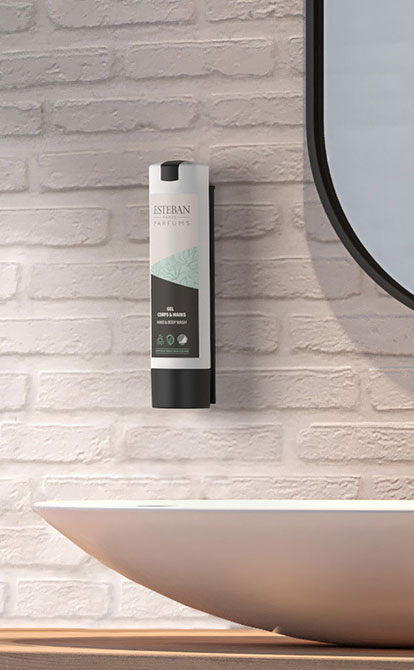
  • Eliminating Single-Use Plastics: For example, transitioning to wall-mounted bulk dispensers, solid shampoo bars, wooden key cards, filtered water stations with glass carafes, and refillable glass condiment jars removes thousands of pieces of plastic from the waste stream.
  • Third-Party Certifications: Getting an official “seal of approval” proves to guests that a hotel is telling the truth. Common certifications include Green Key, the EU Ecolabel, and B Corp.
  • Large-Scale Tech: Installing heat pumps or solar panels requires more upfront money but yields massive savings over time. These upgrades are essential for meeting the industry’s ambitious Net Zero goals.

Sustainable Procurement in Hospitality: Building a Greener Supply Chain with ADA Cosmetics

Bathroom amenities are a visible touchpoint for guests and a significant source of plastic pollution. Transitioning from single-use plastic bottles to wall-mounted bulk dispensers is a concrete starting point.

When choosing a partner like ADA Cosmetics, hoteliers should look for:

  • Certifications: Look for Cradle to Cradle Certified or EU Ecolabel.
  • Transparency: ADA Cosmetics is currently the only industry player to publish a comprehensive Sustainability Report.
  • Proximity: Sourcing from European manufacturers reduces transport-related “beauty miles.”

Systems like Refillution focus on high-performance dispensers that reduce plastic waste by up to 95%. Beyond liquids, solid toiletry bars (shampoo and soap bars) offer a zero-packaging alternative. These are lightweight to ship and eliminate plastic entirely.

FAQ

What are the 3 Ps of sustainability?

The 3 Ps of sustainability constitute the Triple Bottom Line framework, which moves a business’s focus beyond purely financial gain toward a broader set of duties. 

  • People represent social fairness and fair work practices.
  • Planet encompasses protecting the environment through better resource use and less waste. 
  • Profit remains an essential pillar but is redefined as long-term success achieved through steady, sustainable growth rather than short-term gain. 

Adopting this model allows hotels to measure their impact on the world alongside their financial health.

What are the 5 R's of sustainable procurement?

The 5 R’s of sustainable procurement are: 

  • Reject (avoiding unnecessary items)
  • Reduce (using less)
  • Reuse (choosing multi-use over single-use)
  • Recycle (ensuring materials can be processed)
  • Renew (choosing materials from renewable sources)

What is the meaning of green hospitality?

Green hospitality refers to businesses that implement practices to reduce their environmental impact, ranging from energy conservation to the use of eco-friendly cleaning products and support for local food systems.

CONTACT
SHOP NOW

Buy ADA Cosmetics products in our online shop.

REQUEST AN OFFER

For product inquiries worldwide, please contact our sales partners.

CONTACT

For contact inquiries of all kinds, please use our contact form. We will get in touch with you as soon as possible.